
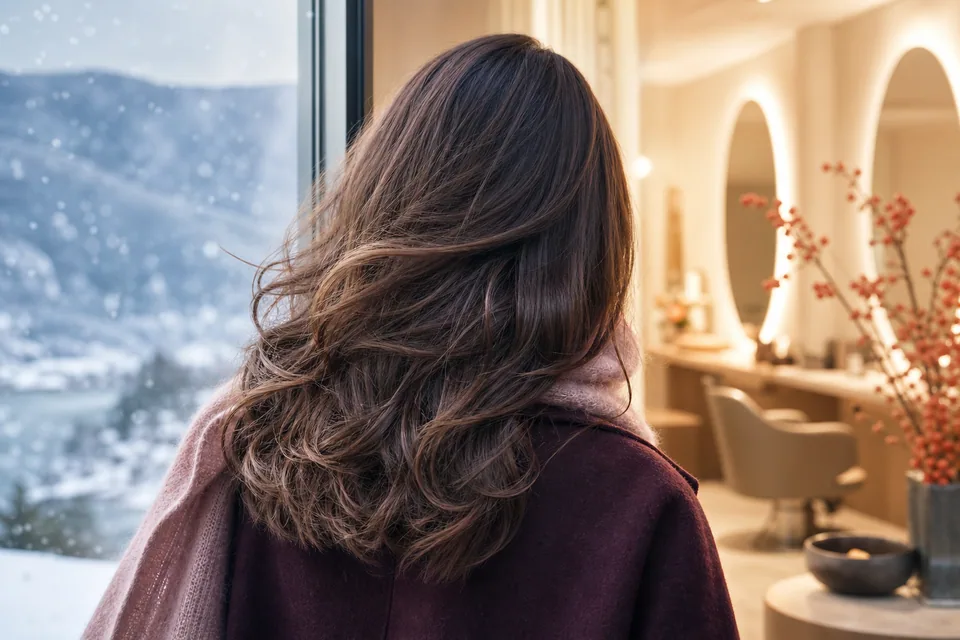
Moving between cold outdoor air and heated rooms can change how hair and scalp feel. Rather than simply choosing richer products, build a clear winter routine that balances cleansing, conditioning, drying and protection from friction.
Care for the condition, not the season label
Ends that feel dry often need more slip, while heavy products can quickly flatten fine roots. Apply conditioner or a mask selectively to lengths and ends, adjusting amount and frequency to texture, chemical history and styling habits.
Watch how the hair behaves over several washes before changing everything. If it feels soft but limp, care may be too rich; if it remains rough and difficult to detangle, a more intensive or slightly longer application may be useful.
Dry wet hair carefully before going into the cold
Leaving home with soaking-wet hair is uncomfortable and exposes vulnerable lengths to extra friction. Press out water without rubbing, detangle from the ends upwards and blow-dry at a controlled temperature.
Extreme heat is faster but can place unnecessary stress on the surface. Suitable heat protection and some distance between nozzle and hair help; make sure the roots are dry before adding a hat or hood.
Hats, scarves and static
Rough fabrics can create visible friction, especially at the nape and on the top layer. Smooth linings, looser styles and regularly cleaned hats reduce rubbing and prevent styling residue from remaining against the hair.
For flyaways, spread a tiny amount of leave-in or serum across the palms and skim it over the lengths. Too much weighs down the roots; changing from a static-prone plastic comb to a suitable comb or brush can also make styling calmer.
Coordinate cutting, colour and care
Rough ends cannot be compensated for indefinitely with masks. A focused trim can restore shape and reduce the need to fight difficult lengths with more heat and product every day.
At Haarstudio Style in Klagenfurt we plan colour around the starting condition and winter routine. Frequently blow-dried or highly lightened hair often benefits from a realistic care plan and deliberate refreshes rather than repeated unnecessary processing.
Cold outside and dry air indoors
Moving between environments changes how the hair feels
Winter hair is exposed to repeated shifts between cold, moisture, heated rooms and dry air. Some people notice static, others rough ends or a tighter scalp. Observe which part changes and when. A richer mask is not an automatic answer, especially if the roots feel coated while only the ends need more slip.
Keep the base routine stable and adjust one element at a time. A little more conditioning through vulnerable lengths or reducing hot-tool temperature may be enough. If the scalp remains itchy, inflamed or painful, avoid self-diagnosis and seek appropriate medical advice when symptoms persist.
Hats, scarves and winter coats
Mechanical friction often appears in the same areas
The nape, shoulders and front contour repeatedly rub against scarves, high collars and coarse fabrics. Long hair caught beneath a coat or bag strap is also exposed to pulling. Choose smoother contact where practical, lift the hair free before fastening clothing and vary tight hairstyles so that the same area is not stressed every day.
A hat is useful protection and does not need to be avoided. Make sure it is clean, comfortable and not so tight that it pulls on the hairline. Detangle gently after wearing it rather than forcing a brush through static or compressed lengths.
Washing and drying in winter
A dry root area before going outside is practical
Wash with water that feels comfortably warm rather than excessively hot, distribute shampoo mainly at the scalp and rinse thoroughly. Condition the lengths according to their needs. Product residue and very hot water can both complicate comfort, so technique matters alongside the label on the bottle.
Dry the root area before leaving the house, especially when the hair is dense or the scalp remains damp for a long time. Use controlled airflow and keep the dryer moving. This is practical for comfort and manageability; it is not a medical claim about cold weather causing illness.
Static hair and flyaway outlines
Use styling purposefully instead of building layers
Static can be influenced by dry air, friction, clothing and the hair’s surface. Start with a small amount of suitable leave-in care or styling product through the areas that need control. Applying several oils and sprays can make fine hair heavy while leaving the underlying friction unchanged.
A natural-bristle or suitable mixed brush may help some routines, while others work better with a wide-tooth comb. Use what detangles without force. A smooth pillowcase, gentler towel and less repeated brushing can be as relevant as another styling product.
Plan winter appointments in advance
Colour, cuts and festive events need different lead times
A simple trim may need less preparation than major lightening, correction or event styling. If a particular date matters, contact the salon early and describe the full service. For colour changes, leave enough time for consultation, possible stages and any adjustment before the event.
Your winter plan does not need to include every service. A stable cut and targeted care may be more useful than combining colour, intensive treatment and a new routine at once. We discuss priorities and guide prices before starting so that the appointment remains clear.
Frequently asked questions
Why does my hair become static in winter?
Dry air, friction and certain materials encourage static. A small amount of suitable care, smoother fabrics and less rubbing may help without making the roots heavy.
Do I automatically need a mask in winter?
Not every hair type needs a rich mask. Texture, condition and the existing routine matter; sometimes regular conditioner, careful drying and lower heat are enough.
How can I wear a hat without flattening my hair?
Put it on only when the hair is dry, choose a shape that is not too tight and loosen the roots with your fingers afterwards. Too much styling product beneath a hat often makes the result heavier.
Does hair automatically need a rich mask in winter?
No. The useful care depends on texture, condition, current products and where dryness is present. Too much heavy product may coat fine hair without addressing friction or heat.
Is going outside with wet hair always dangerous?
A wet scalp and hair can be uncomfortable and difficult to manage in cold weather, but salon advice does not replace medical guidance. Drying the roots before leaving is a practical routine.
Continue reading in the journal
Keep reading, at your own pace.
Four selected guides that explore related questions.
-
Scalp care: a calm foundation for well-kept hair
A respectful guide to cleansing, styling residue and knowing when salon advice or medical assessment is appropriate.
Read article -
How to wash your hair properly: a routine for scalp and lengths
Detailed salon guidance on wash frequency, shampoo, conditioner, rinsing, drying and keeping your product selection manageable.
Read article -
Gentle blow-drying: technique, heat and shape
Salon guidance for controlled blow-drying with heat protection, clear sectioning and practical methods for smooth, fine and curly hair.
Read article -

Considered hair care in the salon and at home
A guide to a manageable routine, targeted product use and planned salon services without unsupported environmental claims.
Read article