
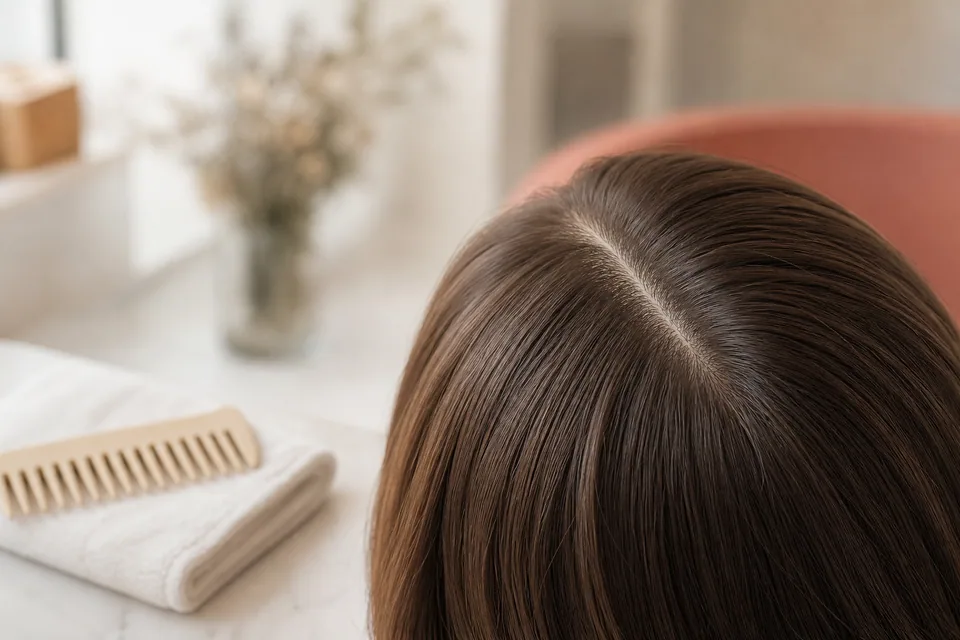
Washing your hair is an everyday task, but it is not completely simple: roots, scalp, lengths and styling residue have different needs. A good routine is not the one with the most steps. It uses a clear sequence, an appropriate amount of product and gentle handling. This guide helps you observe what works without imposing rigid rules or making medical promises.
Match wash frequency to daily life
There is no universal calendar for every scalp
How often you wash depends on scalp comfort, oil, exercise, headwear, styling products and personal preference. Daily washing is not automatically harmful, and waiting as long as possible is not automatically better. The useful interval is the one that leaves the scalp comfortable and the hair manageable with an appropriate technique.
Change the frequency gradually if you want to test a different rhythm. Notice itching, tightness, visible residue and how the roots behave. Persistent inflammation, pain, strong scaling or sudden hair loss should be assessed medically rather than managed by stretching wash days or trying a series of cosmetic products.
Detangle briefly before adding water
Fewer knots mean less rushed pulling on wet hair
Long or easily tangled hair benefits from calm detangling before washing. Support each section, start at the ends and work upwards with a suitable brush or comb. Remove clips and loosen areas around the nape where friction often creates hidden knots.
Do not force severe matting or brush a painful scalp. If extensions are present, follow the system-specific guidance and support the attachment area. A few careful minutes before washing can make shampoo distribution and later conditioning more controlled.
Distribute shampoo at the roots
Amount and sectioning matter more than maximum foam
Wet the scalp thoroughly, place a measured amount of shampoo across several areas and massage with the fingertips rather than scratching with nails. Focus on the scalp, hairline, crown and nape; the rinse usually cleans the lengths sufficiently without rubbing them together.
A second small application can be useful after heavy styling or when the first wash produces little even distribution, but two rounds are not compulsory every time. Density, formula and residue determine the amount. More foam does not prove that the scalp is cleaner.
Rinse thoroughly and calmly
The back of the head, ears and outlines are easy to miss
Let comfortably warm water move through the sections and lift dense areas so that it reaches the scalp. Pay attention behind the ears, at the nape and around the crown. Rinse until the hair and scalp no longer feel slippery with cleanser.
Very hot water can be uncomfortable and does not replace careful technique. Product left in dense hair may contribute to a coated feeling, so allow enough time. If a salon product has specific rinsing instructions, follow those rather than a generic fixed number of seconds.
Condition the lengths and ends
Care supports slip without automatically weighing down the roots
Press excess water from the lengths before applying conditioner so that it is not immediately diluted and lost. Distribute a suitable amount through the areas that need detangling and smoothness, usually from the mid-lengths to the ends, then work through gently in sections.
Conditioner only belongs on the scalp when the particular product is intended for that use. Fine roots and dry ends can need different placement. Rinse according to the formula and desired weight; leaving more residue is not automatically more caring.
Dry wet hair gently
Press, detangle and use the dryer with control
Use a smooth towel to press out water instead of rubbing or twisting the hair. Detangle with support, beginning at the ends. Wet hair can be more vulnerable to stretching and force, so speed should come from good sectioning rather than pulling.
Air-drying is not always gentler if dense hair remains wet, tangled or tied for hours. A dryer used at a sensible distance, moving airflow and moderate heat can be efficient. Apply heat protection where appropriate and dry the roots before repeatedly working the ends.
Review products regularly
A routine may change with colour, length and season
Keep products that perform a clear task and remove unnecessary duplication. A change in haircut, lightening, extension method, exercise pattern or winter clothing may alter what the lengths or roots need. Adjust one element at a time so that the response remains understandable.
Product advice should include purpose, amount and placement. At Haarstudio Style, we relate recommendations to the hair we can see and the routine you describe. Cosmetic guidance cannot diagnose persistent scalp or hair-loss concerns, which belong with an appropriate healthcare professional.
Frequently asked questions
Is washing your hair every day always harmful?
No. A suitable mild routine can be compatible with daily washing for some people. Scalp needs, exercise, products and technique matter more than a blanket rule.
Do I need two shampoo applications at every wash?
No. A second small cleanse can help with heavy residue or uneven first distribution, but it is unnecessary when one careful wash cleans the scalp effectively.
Should conditioner be applied to the roots?
Usually it is focused on lengths and ends, unless the specific product is designed for scalp use. Placement depends on the product and where care is needed.
Is air-drying always gentler than blow-drying?
No. Prolonged dampness, friction and tying can also make hair difficult to handle. Controlled airflow, moderate heat and sensible sectioning can be a gentle practical option.
Continue reading in the journal
Keep reading, at your own pace.
Four selected guides that explore related questions.
-
Scalp care: a calm foundation for well-kept hair
A respectful guide to cleansing, styling residue and knowing when salon advice or medical assessment is appropriate.
Read article -

Considered hair care in the salon and at home
A guide to a manageable routine, targeted product use and planned salon services without unsupported environmental claims.
Read article -

Summer hair care: a practical guide for Klagenfurt
Keep hair cared for through sun, heat, lake and pool days with simple routines for cleansing, protection and styling.
Read article -

Winter hair care in Carinthia: protection without product overload
Practical care for heated air, cold weather, hats and frequent blow-drying, tailored to texture and routine.
Read article