
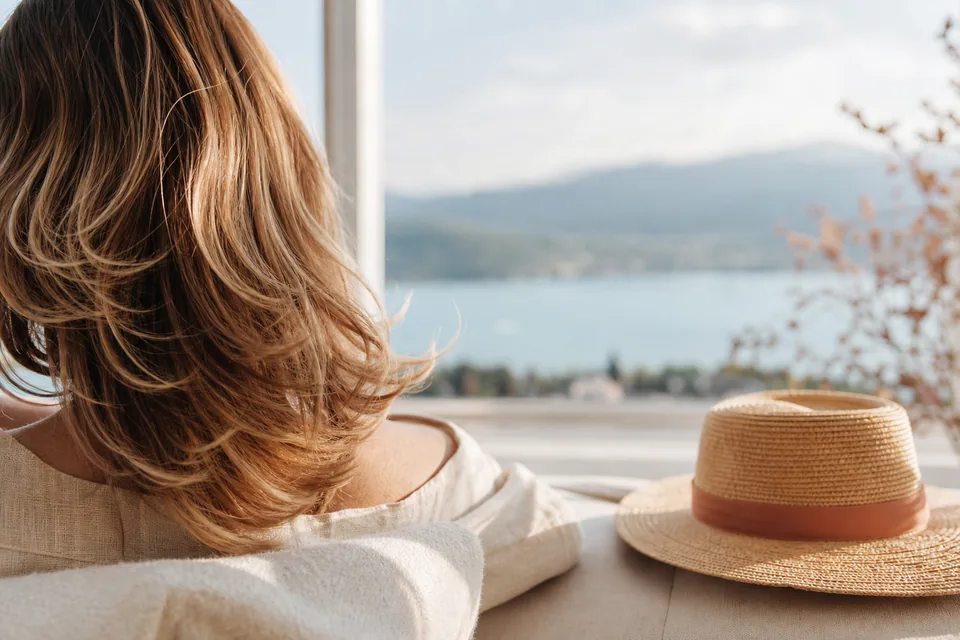
Summer in Klagenfurt often means sunshine, Lake Wörthersee and more frequent washing. A useful routine does not need many products; it should reduce avoidable stress, balance conditioning and give coloured lengths a little extra attention.
Plan ahead for sun, lake and pool
UV exposure, wind, salt and chlorine can place extra stress on the hair’s surface and colour. A hat or scarf provides simple physical coverage; before swimming, clean water and a suitable leave-in conditioner can stop dry hair from immediately absorbing as much pool or lake water.
Rinse the hair with fresh water reasonably soon after swimming. This is not a replacement for a proper wash, but it removes residues early and is especially useful when you will spend several more hours by the water.
Clean gently without weighing down the roots
Sweat and frequent swimming can make extra washes necessary. Use only as much shampoo as needed, focus it on the scalp and roots, and let the lather travel through the lengths as you rinse.
Conditioner is most useful on mid-lengths and ends. Fine hair often prefers lighter textures, while porous or lightened hair may need richer care; the right amount and contact time usually matter more than owning many products.
Treat colour and heat styling thoughtfully
Toners and colour can evolve faster with sunlight and frequent washing. Lukewarm rather than very hot water, colour-conscious cleansing and a toner refresh when needed can help without repeating a full colour service at every appointment.
Air-drying is not always gentler if wet hair rubs for hours or is tied tightly. Press out water with a soft towel, detangle carefully and use an appropriate temperature plus heat protection whenever you blow-dry or use heated tools.
Build a small routine you will actually follow
For days by the water, pack a wide-tooth comb, a tie without a sharp metal join, head covering and a small conditioning product. Avoid very tight styles on wet hair because tension and friction can put unnecessary pressure on vulnerable areas.
If the ends feel rough or the shape has become difficult, a focused summer trim can simplify daily care. At Haarstudio Style we match conditioning, colour refresh and cutting to the actual condition instead of automatically recommending a complete programme.
Consider sun, water and friction together
Summer care starts with your actual habits
A day at Lake Wörthersee, daily cycling and a two-week beach holiday do not create the same needs. Sun, salt or pool water, repeated tying, hats and towel friction can combine in different ways. Start by identifying when the hair becomes difficult to detangle, dull or dry instead of assuming that every summer day requires a heavy treatment.
Colour history and texture matter too. Lightened or porous lengths can respond more visibly to water and sunlight than untreated hair. A practical plan focuses on protective handling and reliable cleansing and conditioning, while recognising that no product can make colour or hair completely unaffected by the environment.
Before and after swimming
A simple sequence prevents frantic rescue routines
Detangle gently before swimming and secure long hair without excessive tension. Depending on the setting and your routine, wetting the hair with clean water before entering may help it absorb less pool or salt water, but it does not create a waterproof barrier. A comfortable braid or low style can reduce tangling while you move.
After swimming, rinse thoroughly as soon as practical. Shampoo is not automatically necessary after every brief swim, but chlorine, salt, sunscreen and repeated exposure may require proper cleansing. Follow with suitable care through the lengths and dry dense areas rather than leaving them bundled and damp for hours.
Drying in heat and while travelling
Air-drying is not automatically the gentlest option
Leaving wet hair rubbing against clothing, tied tightly or exposed for a long time can increase tangling and swelling. Gently press out water with a smooth towel, detangle with support and allow air to circulate. If using a dryer, choose controlled airflow and a moderate temperature rather than intense heat close to one spot.
A travel routine can be small: one suitable cleanser, conditioner, a leave-in or heat protector if needed, and a brush you know works. Decanting products is more useful than taking several unfamiliar samples. Consistent, careful handling usually contributes more than changing the whole routine for a single week.
Maintain colour and shine in summer
Warmer reflections do not automatically mean that the colour has failed
Sunlight, washing, water minerals and the fading of toners can reveal warmth over time. This development is individual and especially visible in lightened hair. Protect the hair physically when practical and use colour-supporting products only when they match the shade and porosity; strong pigments can settle unevenly on stressed ends.
A gloss may refine reflection and shine when the existing brightness and placement are still suitable. It does not replace lightening or correct every uneven colour. We look at the hair in realistic light and decide whether tone, cut, conditioning or a different service best addresses what has changed.
The appointment after your holiday
Assess first, then cut, tone or treat
Do not decide automatically that the hair needs every restorative service at once. After cleansing and observing it through a normal wash cycle, note whether the concern is dryness, knots, faded tone, worn ends or scalp discomfort. These signs call for different responses.
At the salon, we examine the condition and your future colour plans before choosing a treatment. A trim may remove weak ends, a gloss may refine a reflection and targeted care may improve manageability. Persistent scalp symptoms or unexplained shedding should be discussed with an appropriate medical professional rather than treated cosmetically.
Frequently asked questions
Can I wash my hair every day in summer?
More frequent washing can make sense after sweating, exercise or swimming. Gentle technique, thorough rinsing and conditioning the lengths matter more than following a rigid schedule.
What should I do immediately after the pool?
Rinse with fresh water as soon as practical and cleanse later according to the exposure. Very light, porous or freshly coloured hair benefits from particularly consistent protection and prompt rinsing.
Does a hat protect hair as well?
A sufficiently covering hat reduces direct sun on the hair and scalp. It does not replace sunscreen on exposed skin, but it is a useful addition during long periods outdoors.
Do I need shampoo after every swim in a lake?
Not necessarily after every short swim. Rinse well and consider the duration, water, products and scalp comfort. Proper cleansing is useful when residue or repeated exposure is present.
Can sunlight change coloured hair?
Yes. Sun, washing, water and porosity can all affect reflection and fading. Protection and suitable care can support the colour but cannot guarantee that it remains unchanged.
Continue reading in the journal
Keep reading, at your own pace.
Four selected guides that explore related questions.
-
How to wash your hair properly: a routine for scalp and lengths
Detailed salon guidance on wash frequency, shampoo, conditioner, rinsing, drying and keeping your product selection manageable.
Read article -

Hair, sport and cycling helmets: a style for an active day
Make your hair and cycling helmet work together: practical advice on cuts, comfortable styles and simple refreshing after exercise or your commute.
Read article -
Reducing hair breakage: recognise stress and adjust the routine
A practical guide to friction, heat, chemical services and the difference between breakage and shedding.
Read article -
Protecting long hair at night: care without a complicated ritual
Salon guidance on detangling, dry lengths, loose hairstyles, pillowcases and a realistic morning routine for long hair.
Read article