
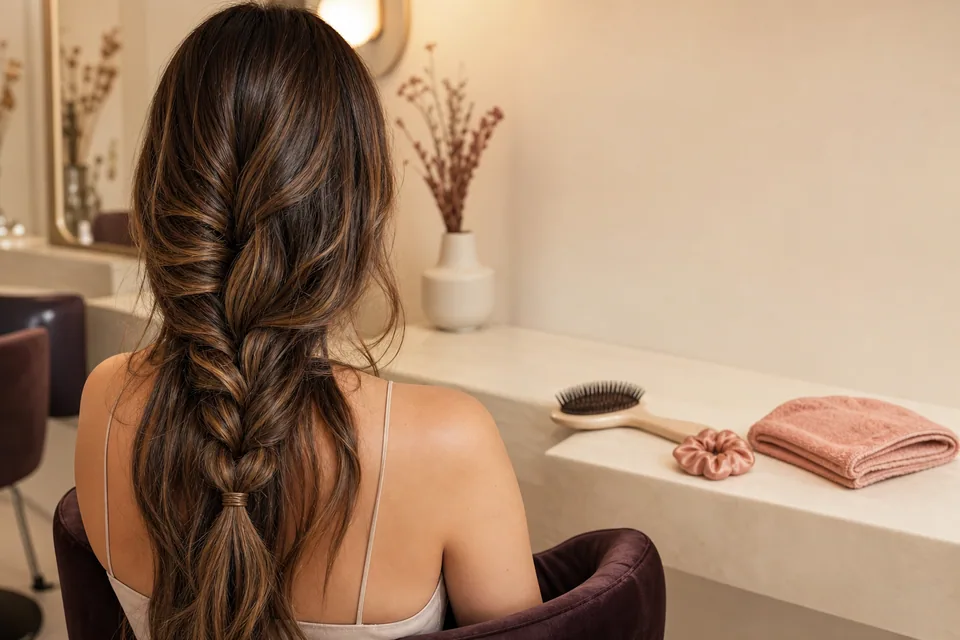
Long hair moves during sleep, rubs against fabric and can become tangled. A simple evening routine can reduce mechanical stress, but it cannot guarantee breakage-free lengths or an unchanged style in the morning. What matters is a dry condition, gentle detangling, comfortable fastening and a process you can actually repeat.
Do not sleep with severely tangled hair
A short calm detangle replaces rushed brushing in the morning
Before bed, separate the hair into manageable sections and work from the ends upwards while supporting each area. Focus on the nape, behind the ears and any section that has rubbed against a collar or scarf. Do not keep brushing once the hair is free of knots simply to make it feel perfectly smooth.
If a mat is tight, close to the scalp or around extension attachments, avoid forcing it. Contact the salon for help. Regular brief detangling is gentler than waiting until several days of movement have combined into one difficult knot.
Go to bed with dry roots
Damp lengths are heavier and behave differently against fabric
Sleeping with wet hair can increase tangling, flatten roots and keep dense sections damp for a long time. After an evening wash, remove water gently and dry the root area and dense lengths with controlled airflow before tying or covering the hair.
This is practical hair-care advice, not a medical claim. Use moderate heat, keep the dryer moving and apply protection where appropriate. If there is not enough time to dry the hair calmly, washing earlier may be more useful than relying on a tight wet bedtime style.
Choose loose night styles
Protection should not create pain or continuous tension
A loose braid, low soft ponytail or comfortable top placement may help keep long hair organised. Use a smooth, suitable fastener and vary its position. The style should not pull at the hairline, create a headache or bend attachment points.
One method will not suit every texture or sleeping position. Curly hair may benefit from a loose high arrangement that protects the pattern, while very long straight hair may remain calmer in a braid. Choose comfort and low tension over an elaborate trend.
View pillowcases and bonnets objectively
Smooth surfaces can reduce friction but are not a cure
A smoother pillowcase or well-fitting bonnet may help reduce tangling and surface friction. It cannot repair split ends, stop medically caused hair loss or compensate for a painfully tight style. Fit, breathability, cleanliness and comfort matter more than the label alone.
Wash the fabric according to its instructions and remove built-up hair products. If a bonnet slides, pulls at the hairline or leaves the scalp uncomfortable, adapt or stop using it. A simple smooth pillowcase can be enough for many routines.
Use leave-in care and oil sparingly
Care belongs on lengths that need it, not automatically everywhere
A small amount of suitable leave-in or serum can improve slip through dry ends. Apply it evenly with the hands and keep it away from roots or extension attachments when the product and method require that. More oil can create residue without reducing the mechanical cause of knots.
Do not turn every night into a heavy treatment unless the product is specifically intended for overnight use. Follow instructions and consider contact with skin, bedding and the scalp. Change one amount at a time so that you can judge the benefit.
Refresh in the morning without restarting completely
Work only on the areas that need attention
Release the night style gently and allow the hair to settle. Smooth, dampen or restyle only the front, nape or curl groups that have changed. Brushing the entire head aggressively can undo the benefit of organised night care.
For curls, use a small amount of water and styling product where definition is missing. For straight or waved hair, root redirection or a quick pass with the dryer may be enough. Accepting some natural movement keeps the routine practical.
Adapt the routine for colour and extensions
Treated lengths need particularly controlled handling
Lightened or repeatedly coloured ends may need more slip and lower heat because their condition differs from untreated roots. Extensions require the method-specific brushing, drying and attachment care given at the fitting. Generic night-care trends should not override those instructions.
Check attachment rows, support them while brushing and never sleep with dense extension areas wet. If pulling, matting or a loose attachment appears, contact the salon. Professional checks remain part of maintaining the service.
Frequently asked questions
Should I sleep with long hair loose?
You can, but a comfortable loose braid or other low-tension style may reduce tangling for some hair. Choose what suits your texture and sleeping habits.
Is a silk pillowcase essential?
No. A smooth, clean surface may reduce friction, but it is only one optional part of the routine and does not replace gentle handling.
Can I leave oil in my hair overnight?
Only when the product is intended for that use and suits your hair and scalp. Use a small amount and keep it away from extension attachments if advised.
Why does my hair tangle particularly at the nape?
The nape rubs against clothing, bedding and head movement and may stay damp longer. Gentle daily checks and reducing repeated friction can help.
Continue reading in the journal
Keep reading, at your own pace.
Four selected guides that explore related questions.
-
How to care for extensions: washing, daily life and check-ups
A practical aftercare guide for hair extensions, from gentle brushing to timely salon maintenance.
Read article -
Reducing hair breakage: recognise stress and adjust the routine
A practical guide to friction, heat, chemical services and the difference between breakage and shedding.
Read article -
Curly haircuts in Klagenfurt: shape, bounce and real life
What makes a thoughtful curl cut: texture analysis, balanced shape, gentle care and realistic styling guidance.
Read article -

Considered hair care in the salon and at home
A guide to a manageable routine, targeted product use and planned salon services without unsupported environmental claims.
Read article