
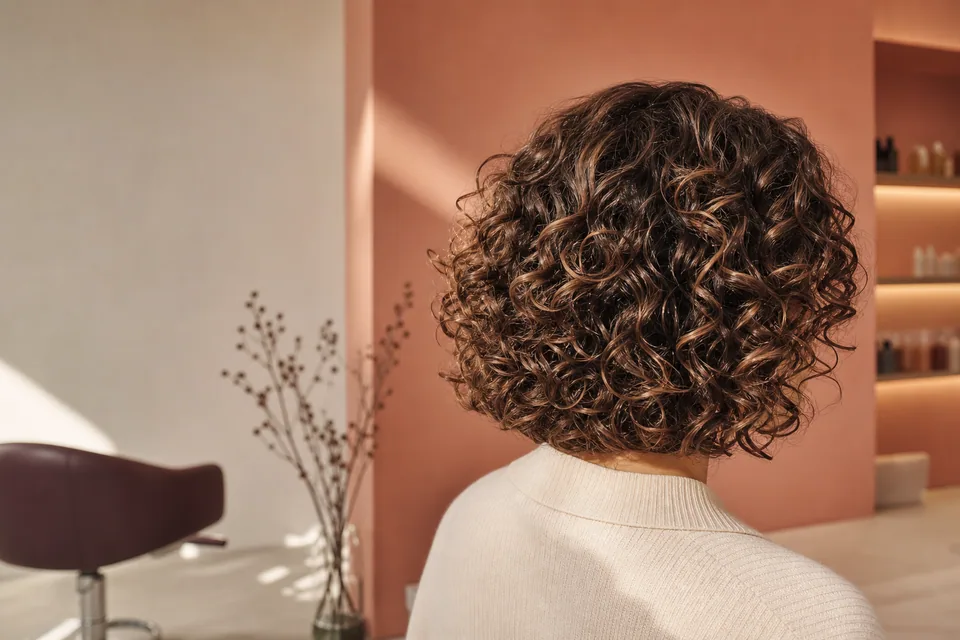
Curly hair changes length, shape and grouping with moisture, care and styling. A good cut therefore considers more than wet hair: natural fall, shrinkage and the routine you genuinely use at home all influence the plan.
Start with texture and habits
Many heads contain several curl patterns, perhaps tighter at the nape, looser on top or more fragile around the hairline. We consider density, crowns, dryness, previous cuts and whether you air-dry, diffuse or regularly wear the hair straight.
For the consultation, arrive with a representative curl pattern and without a tightly fixed style where possible. This shows where volume is missing, which sections spring up quickly and how much length should remain for the desired silhouette.
Plan the right cutting shape
Layers can encourage movement, but very short or disconnected pieces do not automatically improve a shape. Distribution must suit density, shrinkage and the preferred volume so the outline works both freshly styled and on the following day.
Cutting dry, wet or with a combination depends on texture and goal. No single method is universally correct; controlled tension, visible balance and a final check in the natural fall are what matter.
Cleanse, condition and define
Gentle cleansing and enough slip during detangling reduce unnecessary pulling. Distribute conditioner through very wet hair, then choose gel, mousse or cream according to the desired hold and the weight the hair can comfortably carry.
More product does not automatically create better curls. Fine hair can become heavy quickly, while coarse or porous patterns may need stronger hold; a simple, recorded combination is easier to adjust for weather and different wash days.
Dry and refresh without rigid rules
When diffusing, low to medium heat, limited movement and patience help preserve curl groups. Air-dried hair should not remain trapped beneath clothing or bag straps while wet, as repeated friction can disturb the surface and pattern.
On the next day, water and a small amount of the existing styler are often enough for selected sections. At Haarstudio Style we can demonstrate a manageable routine that matches your time, preferred volume and Carinthian weather.
Understand your curls in everyday life
Pictures from different wash days show more than one salon moment
Curl pattern changes with washing, products, weather, sleep and the time since styling. If possible, bring photographs showing the hair on a fresh wash day and later in the routine, both loose and in the styles you commonly wear. This gives the consultation a more realistic picture than arriving with a finish that you rarely recreate.
Explain which areas shrink most, lose definition or become difficult to detangle. Density and individual curl groups may vary across the head. The aim is not to force everything into one uniform pattern, but to develop a shape and routine that work with those differences.
Cut wet, damp or dry
The method follows the goal rather than a slogan
There is no single cutting method that is automatically correct for every curl. Wet or damp hair can provide controlled sectioning and even tension; dry observation can reveal shrinkage and the way individual groups sit. The stylist chooses the approach, or a combination, according to texture, shape and the result being planned.
Arrive with the hair in a condition agreed for the appointment. Heavy product build-up, stretched braids or a style that hides the natural fall can make assessment harder. If you are unsure, ask when booking rather than following generic advice from a different cutting system.
Dose cleansing and care for the structure
Slip helps, but more product cannot replace gentle technique
Distribute cleanser at the scalp and let the rinse move through the lengths without aggressive rubbing. Conditioner should provide enough slip to detangle in sections while the hair is supported. The amount depends on length, density, porosity and formula, so fixed online quantities are rarely useful.
Rinse according to the desired weight and product instructions. Leaving too much residue can flatten some curls or irritate a sensitive scalp, while insufficient conditioning may make detangling harder. Change one variable at a time so that you can judge how the hair responds.
Build styling and drying in a clear order
Sequence, water and hand movements shape the result
Apply styling products to evenly damp sections and distribute them with the hands or tool that works for your density. Water content can be as important as product quantity. Scrunching, smoothing or finger-coiling create different effects, and not every section needs the same amount of manipulation.
Air-drying is one option, but prolonged dampness, touching and friction can disrupt the pattern. A diffuser at controlled heat and airflow may be more practical. Avoid repeatedly moving the hair once a cast is forming; when fully dry, soften the finish gently if that is the desired result.
Maintain the shape between appointments
Night care, weather and refreshing need a realistic plan
A loose protective night style and a smooth surface can reduce friction, but comfort matters. In the morning, refresh only the sections that need it with water and a small amount of suitable product rather than soaking and restyling the whole head automatically.
Humidity, wind and physical activity will change every curl finish. The goal is not immobility, but a shape that changes in a pleasing way. Notice where weight returns or the outline loses balance; that feedback helps determine the next cut more accurately than a fixed calendar interval.
Frequently asked questions
Should I arrive with freshly washed curls?
A representative curl pattern without tight braids, heavy brushing or excessive hold is most useful. Ask when booking whether the planned technique requires any specific preparation.
Must curly hair always be cut dry?
No. Dry, wet and combined techniques each have benefits for different textures and goals. The important points are conscious allowance for shrinkage, balance and natural fall.
How often does a curl cut need updating?
It depends on length, shape, growth and daily wear. A shape check is useful when the outline loses balance, curls fall heavily or ends repeatedly catch and tangle.
Must curly hair always be cut dry?
No. Wet, damp, dry and combined approaches each have valid uses. The choice depends on the texture, shrinkage, desired shape and the stylist’s planned technique.
How do I find the right amount of product?
Start with a small, evenly distributed amount and adjust one product at a time. Length, density, water content, porosity and formula all affect the quantity needed.
Continue reading in the journal
Keep reading, at your own pace.
Four selected guides that explore related questions.
-

Refreshing second-day curls: do less and target what matters
Refresh second-day curls by distinguishing flat sections, frizz and product build-up. Practical steps and personal hair advice from Klagenfurt.
Read article -

Gentle blow-drying: technique, heat and shape
Salon guidance for controlled blow-drying with heat protection, clear sectioning and practical methods for smooth, fine and curly hair.
Read article -

Volume wave or perm: define the shape you want first
Understand volume waves and perms by discussing movement, hair condition and upkeep before a consultation in Klagenfurt. Clear goals come first.
Read article -

Protecting long hair at night: care without a complicated ritual
Salon guidance on detangling, dry lengths, loose hairstyles, pillowcases and a realistic morning routine for long hair.
Read article