
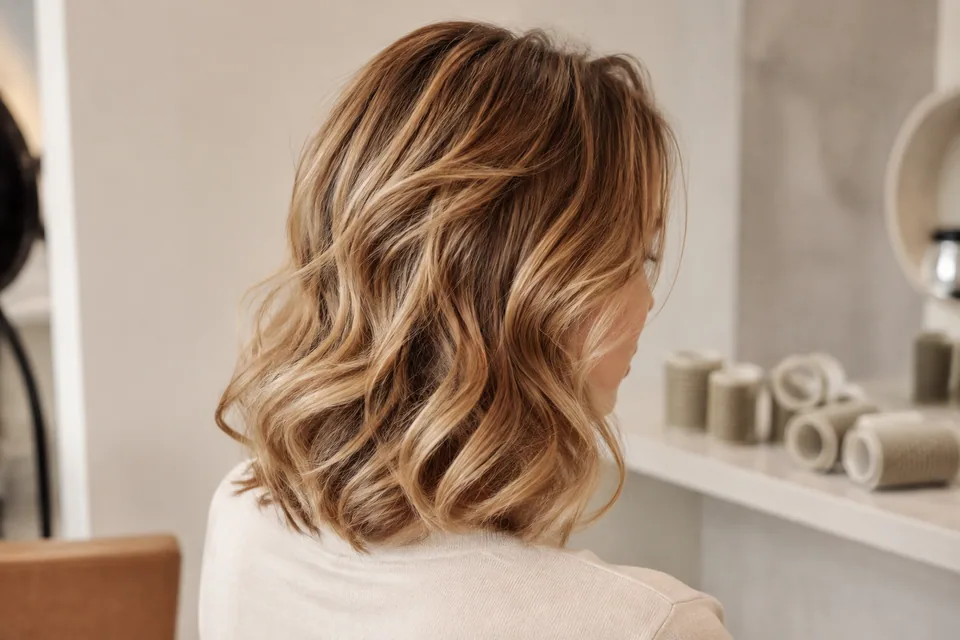
Would you like more lift at the roots without obvious curls? Or would you prefer straight hair to feel more lively without a daily round-brush routine? The terms volume wave and perm often arise in these conversations. They should not be treated as two packages defined identically everywhere. What matters is the desired result, your existing texture and the treatment actually proposed. A name alone does not establish which shape is realistic for your hair.
Separate root lift, waves and curls
More volume can mean very different things: less flatness at the crown, movement through the lengths or visible curls throughout. These goals require different planning. Point out where movement is missing. A photograph helps if you explain whether you like the height, the curve of a wave or the overall silhouette. A heavily blow-dried result is not automatically a suitable reference for hair you intend to air-dry.
The term volume wave is often used for a wish for loose movement or supportive fullness. It is not a reliable promise that only the roots will change or that no curls will appear. Ask specifically about the planned shape and how it might look without additional styling. This turns an unclear service name into a shared description that can later be evaluated against your actual routine.
Longer-lasting reshaping is not a blow-dry
A shape produced by blow-drying or setting is different from chemical reshaping. During a perm, the hair is treated with products intended for that purpose and shaped in a chosen way. This requires professional assessment and adherence to the particular system. It is not a harmless shortcut simply because the desired result looks soft. Even a subtle wave must be compatible with the condition of the hair.
Ask whether the proposed service is genuinely a reshaping treatment and what effect it aims to achieve. For a single celebration, temporary styling may be the more suitable choice. If you want a longer-term change in texture, allow time for a separate consultation. Different goals should not be booked under the same brief appointment label. Clarifying the difference makes preparation and the likely scope easier to assess realistically.
Your history includes lengths treated long ago
Previous lightening, colouring, straightening or reshaping may still be present in the lengths even when the roots have grown back naturally. Describe these treatments as fully as possible. The relevant history is not limited to the past few weeks. Different areas may also have different treatment histories. Visible shine alone does not establish how well hair can tolerate another chemical service.
Suitability therefore needs to be assessed in the actual hair. Manufacturer instructions, its condition and any appropriate preliminary checks can inform that assessment. A test is not a universal clearance for every section, however. With an unclear history or noticeably stressed lengths, postponing the goal or choosing a non-chemical styling alternative may be wiser. Such a limit is an important part of the decision, not merely an inconvenient reservation.
Cut and length change how movement appears
A wave needs to be considered as part of the hairstyle. Longer sections carry different weight from a short cut, while a compact outline behaves differently from strongly layered lengths. The desired fullness cannot therefore be specified through a treatment name alone. Show your preferred length and explain whether the cut may change at the same time. Otherwise, two decisions that jointly determine the result are being made separately.
For fine hair, first consider shape and visible fullness. The underlying issue may be an unhelpful distribution of weight in the cut or a very heavy care routine. More chemical processing is not automatically the answer to flat roots. Discuss what improvement might already be possible through cutting, drying or product quantity, and which further change you genuinely want.
Do not confuse lasting shape with freedom from maintenance
A longer-lasting shape does not mean your hair will fall identically every morning without attention. After washing, you may need a different drying method, and product quantity should suit the new movement. Ask to be shown a simple routine compatible with your tools and available time. In particular, establish which areas should not be repeatedly brushed out or worked against the intended shape.
For washing, colouring, heat and further treatments, follow the guidance for the system actually used. Internet rules assigning identical waiting periods to every product are not a safe substitute. Nor can one lifespan be given for every head of hair. Growth, cutting, wear and personal perception alter the effect. If you frequently want to alternate between smooth and wavy styles, include that wish in the planning rather than discovering it matters afterwards.
Take three clear questions to the consultation
Before enquiring, write down where you want movement, how you wear your hair after washing and which chemical treatments remain in the lengths. Add a photograph of your usual hair and a few suitable references. This is more helpful than asking for the biggest or gentlest possible wave without further information. Words such as natural describe an effect; they do not replace technical and individual assessment.
At Haarstudio Style in Klagenfurt, you can ask about volume or reshaping during a consultation. This article does not promise that a particular service or scope will suit your starting point. Ask about the appointment’s components too: cutting, preparation, treatment and finishing should be distinguished clearly. You can then decide on a change you understand, rather than merely choosing a term from a price list.
Frequently asked questions
Is a volume wave always gentler than a perm?
That cannot be established from the name alone. The actual products, their application and the hair’s condition are decisive. A soft-looking goal does not automatically make a chemical treatment suitable for every head of hair.
Can bleached hair be reshaped?
This needs individual assessment based on its specific history and the manufacturer’s instructions. Stressed or differently treated sections may rule out the desired combination. Mention previous lightening explicitly, even if it remains only in the lengths.
Can a volume wave replace daily styling entirely?
It does not promise an identical, effortless hairstyle every morning. Different movement may require a new care and drying routine. Discuss beforehand which step you want to make easier and what attention will still be needed.
Continue reading in the journal
Keep reading, at your own pace.
Four selected guides that explore related questions.
-

Fine hair: creating visible fullness through shape and routine
Practical guidance on cutting, styling and caring for fine hair without exaggerated volume promises.
Read article -
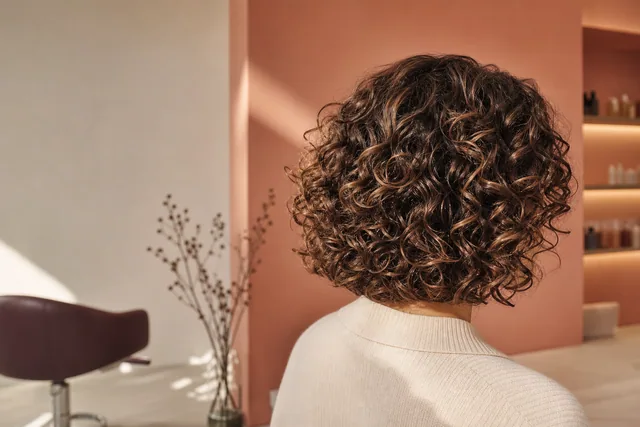
Curly haircuts in Klagenfurt: shape, bounce and real life
What makes a thoughtful curl cut: texture analysis, balanced shape, gentle care and realistic styling guidance.
Read article -

How to use styling products: hold, volume and shine without overload
A practical salon guide to mousse, gel, cream, wax, spray, powder, oil and a clear sequence for different finishes.
Read article -
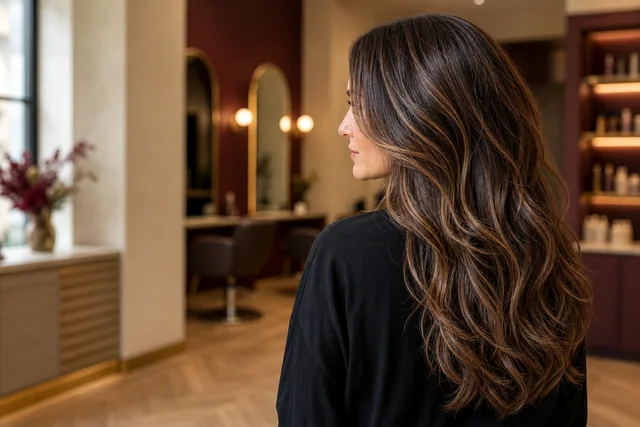
Hair-colour consultation: from desired shade to a realistic plan
A salon guide to reference images, colour history, brightness, reflection, tests, care and transparent stages for a new hair colour.
Read article