
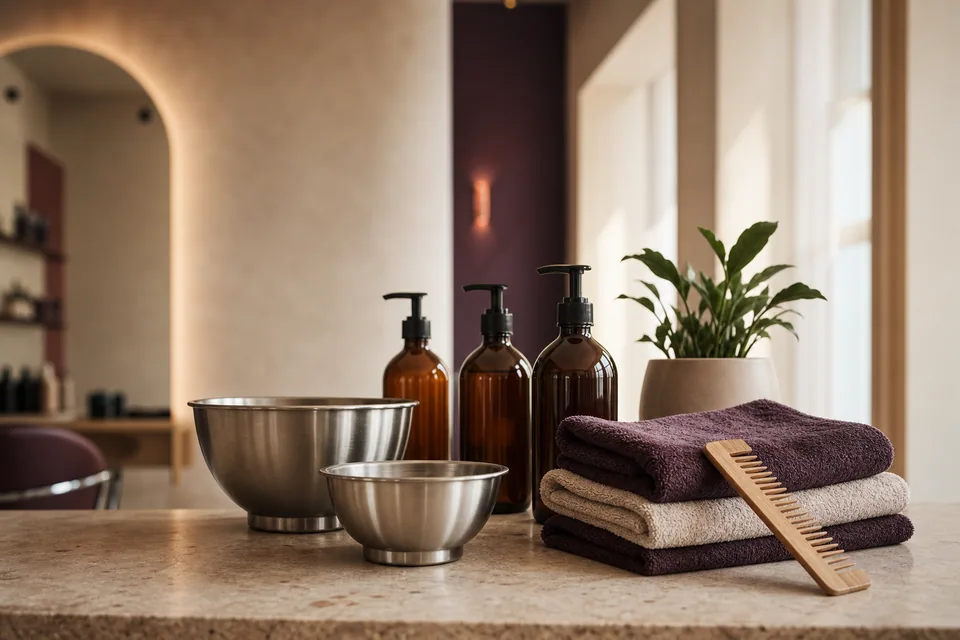
Styling products perform different jobs. Mousse can support volume and hold, gel groups or fixes hair, cream calms the surface, powder adds grip and oil changes shine and softness. Problems often come not from one “wrong” product but from excessive amounts, contradictory layers or applying the right formula in the wrong place.
Name the desired finish first
Volume, definition, smoothness and shine require different tools
Decide whether the main goal is lifted roots, curl grouping, flexible texture, strong hold, a smoother surface or added shine. One product may support more than one effect, but asking it to create every result often leads to layering. Hair length, density and the way it is dried also influence the choice.
Use the salon finish as a lesson: ask what was applied, where, how much and at which stage. A clear purpose makes it easier to repeat the result and to know which step to remove when the hair feels heavy.
Mousse and root spray
Volume begins with distribution and drying direction
Apply mousse in small amounts across sections rather than placing one large ball on the crown. Root spray belongs mainly where lift is needed. Comb or use the fingers for even distribution according to the texture, then set the root direction with airflow.
Product cannot create stable volume while hidden roots remain damp. Dry the base first and allow it to cool. On fine hair, too much mousse through the ends may make them separate or feel coated; keep the focus on the area that needs support.
Gel, cream and curl products
Grouping also depends on water and hand movements
Curl cream can add slip and softness, while gel can provide grouping and a stronger cast. Apply to evenly damp sections and consider how much water remains in the hair. Smoothing, raking and scrunching create different patterns even with the same formula.
Gel and cream can be combined when their formulas and amounts work together, but test a small quantity. Flaking, stickiness or collapsed curls may come from excessive layers or incompatible application. Change one variable rather than adding a third product.
Wax, paste, clay and pomade
Short hair needs texture or shine in a controlled amount
Warm a very small amount between the hands and distribute through the back and sides before refining the front. Paste and clay often support a more matte or textured effect; wax and pomade can provide different levels of control and shine. Product names vary, so judge the actual finish.
Concentrating the whole amount at the fringe can make it greasy and difficult to reshape. Build gradually and keep the root movement created during drying. Wash hands after application and cleanse the scalp properly when product has accumulated.
Hairspray and heat styling
Fix the completed shape rather than replacing technique
Create the form through drying, curling, pinning or smoothing first. Apply hairspray from an appropriate distance in light, even layers, focusing on areas that need support. Spraying a damp section heavily and then adding high heat may create stiffness without better control.
Use heat protection as directed before hot tools and keep fixation products away from open flames and excessive heat. More spray cannot guarantee an unchanged style in wind, humidity or movement. Aim for the level of hold suited to the occasion and comfort.
Powder and dry shampoo
Grip and visual freshness are not cleansing
Texture powder adds friction and lift, while dry shampoo absorbs some oil. Apply sparingly at the root, allow it to settle as directed and distribute it. Repeated layers can create residue, make the scalp feel coated and complicate later detangling.
These products can extend a style but do not remove oil, sweat and product in the way washing does. Include proper cleansing and clean brushes and headwear. Persistent scalp discomfort is not a reason to keep adding powder.
Oil, serum and a shine finish
Calm the ends purposefully without weighing down the roots
Begin with one drop or a very small amount, spread it fully over the hands and touch the ends and outer lengths. Fine hair may need less than dense or coarse hair. Keep oil away from roots when volume is the priority and from extension attachments if method guidance requires it.
Oil can change feel and reflection, but it does not repair split ends or provide unlimited heat protection unless the product specifically states that function. Add only after seeing how the first amount settles.
Build a simple sequence
Preparation, shaping and finishing are separate phases
Prepare damp hair with the care and protection it needs, use one main styling product to support the shape, then add a small finishing step only where required. This sequence prevents a shine product from blocking root volume or a heavy spray from arriving before movement is created.
Write down the successful combination and repeat it before buying something new. At Haarstudio Style, we can demonstrate product amount and placement on your own cut so that the routine remains understandable at home.
Frequently asked questions
Why does my hair go flat despite using a volume product?
The amount may be too heavy, distribution may be uneven or the roots may not be dried in the right direction. Product is only one part of the result.
Can I combine gel and cream?
Yes, if the formulas suit the hair and the amounts remain controlled. Test a small combination and observe grouping, weight and residue.
Is dry shampoo the same as washing hair?
No. It absorbs some oil and adds grip but does not rinse away sweat, sebum and accumulated products.
How much hair oil should I use?
Start with one drop or the smallest practical amount, spread it across the hands and apply to the ends. Add only if the hair still needs it.
Continue reading in the journal
Keep reading, at your own pace.
Four selected guides that explore related questions.
-
Fine hair: creating visible fullness through shape and routine
Practical guidance on cutting, styling and caring for fine hair without exaggerated volume promises.
Read article -
Curly haircuts in Klagenfurt: shape, bounce and real life
What makes a thoughtful curl cut: texture analysis, balanced shape, gentle care and realistic styling guidance.
Read article -

Choosing a men’s haircut: contours, texture and transitions
Which contours and transitions suit your haircut? Understand growth patterns, scissors, clippers and styling before a consultation in Klagenfurt.
Read article -
Gentle blow-drying: technique, heat and shape
Salon guidance for controlled blow-drying with heat protection, clear sectioning and practical methods for smooth, fine and curly hair.
Read article