

A millimetre setting describes only a small part of a men’s haircut. Contours, weight through the top, natural growth patterns and the connection to the beard all contribute to its shape. This guide helps you separate those decisions and discuss them in plain language. During a haircut consultation in Klagenfurt, you can then explain more precisely what you want and which styling steps you realistically intend to use at home.
Read growth and proportions
Crowns, receding outlines, varied density and natural fall influence the shape. A sound plan works with these features instead of forcing every area into the same trend template.
Show the side profile and front shape you like and explain what fails in the current cut. Length, weight and blending then become specific rather than being described only as short or modern.
Classic, textured or faded
Scissor work can create movement and softer outlines, while clippers define short areas. Many wearable shapes combine both and place the transition where it suits the head.
Texture does not mean removing hair at random. It is used deliberately to make strong areas more mobile without taking unnecessary substance from finer sections.
Treat beard and hair as one picture
Sideburns, temples and the beard line connect the haircut to the face. Proportions can be coordinated even when a complete beard service is not wanted at every visit.
Mention beard requests when booking so enough time is available. If skin is sensitive, share relevant reactions while recognising that the salon does not provide medical assessment.
Care and the next cut
Choose styling product according to hold, shine, hair thickness and finish. Ask to see quantity and distribution because too much at the roots can hide movement and shape.
Maintenance frequency depends on length and personal preference. A very precise short outline changes visibly sooner than a softer, longer form.
Discuss functions, not only centimetres
Outline, movement and morning effort define the haircut goal
Tell us what needs to happen in daily life: whether the hair must stay off the face, sit neatly without product, work under a helmet or allow a softer weekend style. This information is often more useful than specifying one length for the whole head.
We translate those functions into weight, transitions and an outline suited to the growth pattern. Reference pictures can support the conversation, but their density, head shape and professional finish do not create a universal formula.
Respect cowlicks and the hairline
Natural direction can be shaped but not cut away
A crown cowlick, strong front direction or uneven recession influences where very short lengths stand up and where longer weight provides control. We assess these areas dry and in their usual position. Cutting them shorter is not always the best route to making them less visible.
Hairlines are naturally individual and may change. The outline should look intentional without being forced unnaturally high or sharp. Sudden or unexplained hair loss is a medical matter and not something a haircut or styling product can diagnose.
Use clippers, scissors and blended techniques purposefully
The tool follows the desired surface
Clippers provide controlled short lengths and can build a clean transition; scissors retain different movement and texture. Scissor-over-comb or a combined approach can connect areas without making every haircut either purely “machine” or “scissor”.
A number on a clipper guard does not fully describe the result because head shape, direction and blending height matter. We agree how crisp or soft the transition should feel and choose the tools accordingly.
Choose styling product by finish
Matte, glossy, flexible and firm are different goals
Start by deciding whether you need control, separation, texture, volume or a polished surface. A light cream, paste, wax, gel or spray can behave differently depending on hair length and whether it is applied damp or dry. Use a small amount, warm it between the hands and distribute before adding more.
More product cannot correct an unsuitable cut or drying direction. We can demonstrate how to set the roots and where the product belongs. A routine that takes two repeatable steps is usually more useful than a shelf of products with overlapping purposes.
View the beard and haircut as one overall form
Transitions and proportions should be considered together
Sideburns and the connection into the beard influence how a fade or longer side appears. Tell us whether you want only an outline included or a broader beard service, because the time and scope differ. A complete shave or cosmetic skin treatment is not automatically part of a haircut.
The beard’s density and growth direction can be uneven, so a reference shape must be adapted just like the hair. We balance the visible proportions and explain straightforward home maintenance without promising that styling can create density where it is absent.
Frequently asked questions
How does a fade differ from classic blending?
A fade usually creates a more distinct progression through very short lengths. Height and strength should suit head shape, growth and the desired finish.
Can a haircut hide areas of lower density?
Shape and styling may make transitions look calmer but cannot create new density. Sudden or unusual changes should be assessed medically.
Which styling product should I use?
It depends on thickness, length and the desired hold or shine. A small amount of one suitable product is often better than several layers.
What is the difference between a fade and a taper?
Both describe transitions, but the height, area and degree of shortening differ. The exact shape should be discussed rather than relying on the term alone.
How often should a short men’s cut be refreshed?
Very precise short outlines tend to show growth sooner, but the useful interval depends on growth rate, shape and how crisp you want the result to remain.
Continue reading in the journal
Keep reading, at your own pace.
Four selected guides that explore related questions.
-
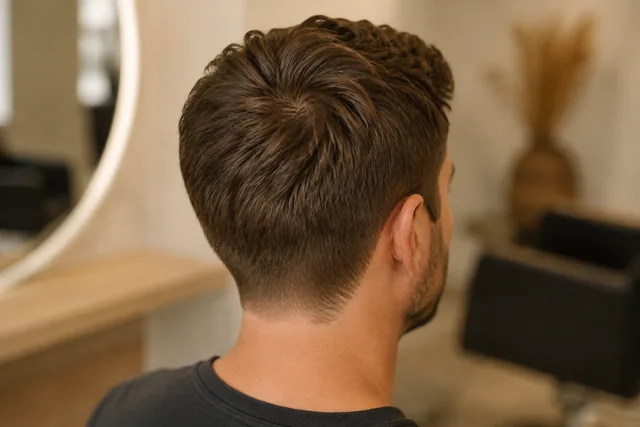
Men’s haircuts with cowlicks: work with the growth direction
A cowlick at the crown or hairline? Discuss suitable lengths, partings and daily styling with this practical men’s haircut guide from Klagenfurt.
Read article -
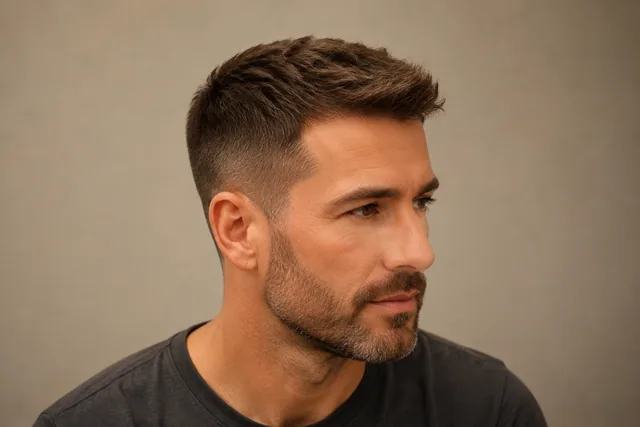
Beard and haircut: plan the outlines as one complete look
Consider beard lines, sideburns and haircut together: proportions, everyday care and clear wishes for your consultation at Haarstudio Style in Klagenfurt.
Read article -

How to use styling products: hold, volume and shine without overload
A practical salon guide to mousse, gel, cream, wax, spray, powder, oil and a clear sequence for different finishes.
Read article -

Hair, sport and cycling helmets: a style for an active day
Make your hair and cycling helmet work together: practical advice on cuts, comfortable styles and simple refreshing after exercise or your commute.
Read article