
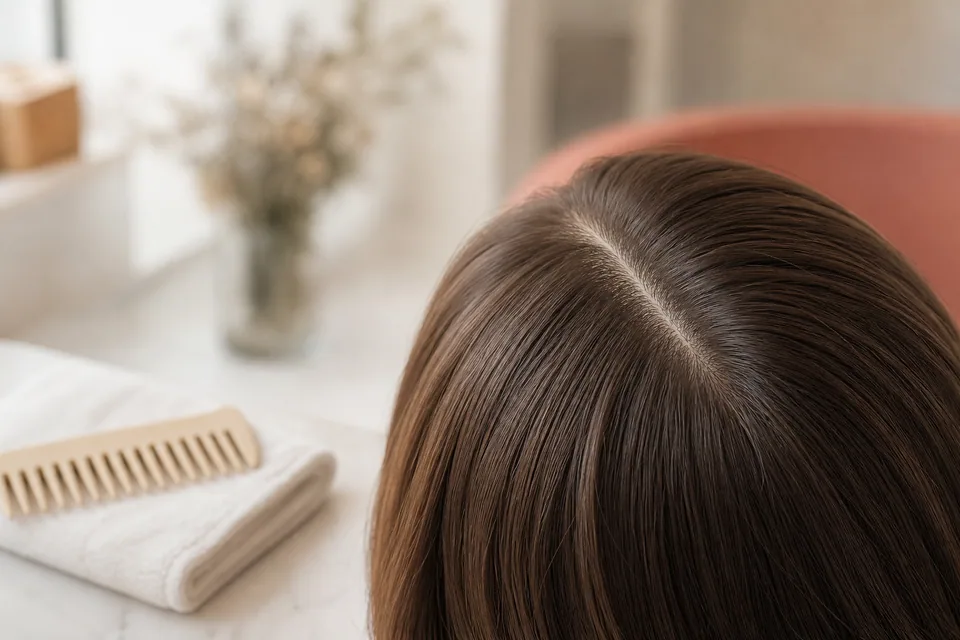
The scalp responds individually to cleansing, products, friction and the environment, just as hair does. A simple routine and careful observation are generally more useful than frequent product changes or self-diagnosis.
Cleanse gently and rinse thoroughly
Base washing frequency on how the roots and scalp actually feel. Massage shampoo with the pads of your fingers without scratching with nails or working forcefully over sensitive areas.
Shampoo, conditioner and styling residue may become uncomfortable when not fully rinsed. Spend extra time at the back of the head and along the hairline, which are easily missed during a hurried wash.
Use targeted products rather than many products
Dry shampoo, hairspray and root products are useful tools, but repeated layers should not indefinitely replace regular cleansing. Notice whether continued use is accompanied by itching, tightness or visible build-up.
Introduce new products one at a time so changes are easier to trace. Fragrance, cooling sensations or strong tingling do not prove effectiveness and may be unwelcome on a sensitive scalp.
What a salon can assess
A salon can discuss visible residue, breakage close to the roots and the practical effect of your routine. This may lead to suggestions for gentler handling, a more suitable washing pattern or styling with less tension.
Hair professionals do not diagnose medical conditions. Pain, weeping areas, persistent severe flaking, inflammation or a sudden change in hair loss should be assessed by a qualified medical professional.
Build a routine you can understand
For a few weeks, note washing intervals, products and any noticeable reactions. This creates a clearer basis for discussion than changing shampoo, treatments, diet and styling at the same time.
Keep brushes and towels clean, and air or clean headwear regularly. Small consistent steps make it easier to learn what feels comfortable for your scalp in everyday life.
Collect observations instead of self-diagnoses
A simple record makes patterns easier to discuss
Note when itching, tightness, oiliness or visible flakes occur and whether they follow washing, exercise, a particular styling product or headwear. A photograph and a short dated note can be more useful than changing several products from memory. Do not scratch or deliberately provoke the area to “test” it.
These observations do not establish a diagnosis, but they help separate an occasional cosmetic concern from a persistent change that needs medical assessment. Sudden hair loss, pain, open areas, strong inflammation or symptoms that continue despite a gentle routine belong with an appropriate healthcare professional.
Review the washing method calmly
Water, distribution and rinsing matter as much as the label
Use comfortably warm water, distribute shampoo across the scalp in sections and massage with the fingertips rather than scratching with nails. The necessary amount depends on density, product and residue. A second gentle cleanse may sometimes be more effective than using one very large dose.
Rinse thoroughly, including around the ears, nape and crown. Apply conditioner mainly where the lengths need slip unless the product is specifically intended for scalp use. A well-known product can still feel different when quantity, water temperature or rinsing changes, so adjust one factor at a time.
Put dry shampoo and styling residue into context
Useful helpers should not replace regular cleansing indefinitely
Dry shampoo can absorb oil and make a style easier to manage between washes. Repeated layers, however, can combine with sebum and styling products at the roots. Brush or distribute it according to instructions and include proper cleansing rather than continuing to add more whenever the hair feels flat.
Powders, fibres, sprays and waxes also accumulate differently. Tell the salon what you use and how often if the scalp feels coated or uncomfortable. The answer may be a simpler application and thorough rinse, but persistent symptoms should not be treated as a product-build-up problem without medical assessment.
Know what the salon can see and what it cannot determine
Cosmetic advice has a clear professional boundary
A hairdresser can observe visible redness, residue, scaling, breakage and changes in density and can adapt washing, product use or mechanical handling. The salon cannot diagnose a scalp disease, allergy, hormonal cause, nutritional issue or medical reason for hair loss.
When signs fall outside cosmetic care, we say so and recommend appropriate medical advice before intensive scalp treatments or attachment-based services. This boundary protects you from false certainty and allows later salon planning to be based on a safer starting point.
Include brushes, textiles and headwear in hygiene
Everyday objects belong in the care routine
Remove loose hair from brushes and combs and clean them according to their material. Pillowcases, towels, hats, helmet liners and fabric headbands collect skin oils and products, so wash them at a suitable frequency. Do not share personal tools when scalp symptoms are present.
A clean object is not a treatment, but it prevents old residue from being returned immediately to freshly washed hair. Replace damaged tools with sharp seams or rough edges that pull. If a hat or helmet repeatedly creates pressure or discomfort, check its fit rather than covering the irritation with more product.
Frequently asked questions
Can a salon identify the cause of a scalp problem?
No. A salon can discuss visible observations and care habits but cannot diagnose. Persistent, painful or suddenly severe symptoms should be assessed medically.
How often should I wash my hair?
There is no universal interval. Roots, activity, products and comfort shape the rhythm; gentle application and complete rinsing are more important than one fixed schedule.
Is a scalp scrub always helpful?
No. Mechanical or chemical exfoliation may irritate sensitive skin. Seek advice first and avoid it on sore, inflamed or broken areas.
Should I change shampoo immediately when my scalp itches?
Not automatically. Review recent products, washing technique and symptoms, and change one factor at a time. Persistent, painful or inflamed symptoms need medical assessment.
Can frequent dry-shampoo use leave residue?
Yes. Powder can combine with oil and styling products. Use it as directed and include regular thorough cleansing instead of repeatedly layering it at the roots.
Continue reading in the journal
Keep reading, at your own pace.
Four selected guides that explore related questions.
-
How to wash your hair properly: a routine for scalp and lengths
Detailed salon guidance on wash frequency, shampoo, conditioner, rinsing, drying and keeping your product selection manageable.
Read article -

Considered hair care in the salon and at home
A guide to a manageable routine, targeted product use and planned salon services without unsupported environmental claims.
Read article -

Winter hair care in Carinthia: protection without product overload
Practical care for heated air, cold weather, hats and frequent blow-drying, tailored to texture and routine.
Read article -
How to prepare for a salon appointment: a practical checklist
Bring your goal, colour history, timing and hair condition clearly into the consultation.
Read article