

Curtain bangs usually divide in the centre or slightly to one side and blend softly into the lengths. For them to work beyond the salon visit, the shortest point, growth direction, texture and realistic daily styling time must be planned together.
Choose the length and facial opening
The shortest section may begin near the brow, eye, cheekbone or lower, changing both expression and flexibility. Longer versions tuck behind the ear more easily, while shorter pieces frame the eyes more strongly and require more regular shaping.
Rather than following a rigid face-shape rule, we consider the forehead, glasses, parting, existing layers and intended effect. Bring inspiration and also show how you normally wear your hair on an ordinary day.
Account for cowlicks, density and texture
A front cowlick is not an automatic barrier, but it affects the division, length and drying method. Very fine front sections need a restrained parting so too much density is not removed from the sides.
For waves and curls, dry spring and shrinkage are included in the plan. The fringe can be worn naturally moving or smoother; before cutting, clarify which finish is likely to be your everyday choice.
Style with a small amount of focused technique
The key moment is often drying the roots. Direct the section in different directions first to loosen a fixed split, then use a brush or fingers to guide it away from the face.
Excessive turning on a round brush can create a rigid curve rather than the desired soft sweep. A small amount of product and controlled heat are usually enough, with heat protection whenever hot styling is frequent.
Plan trims and the grow-out
Shorter curtain bangs change position relatively quickly. A small fringe appointment can preserve the opening without rebuilding the whole haircut; cutting them yourself is risky because tension and dry length are easy to misjudge.
When growing them out, the sides can gradually connect into existing layers. At Haarstudio Style in Klagenfurt we select a starting length that keeps both the fresh shape and the following weeks wearable.
Derive the right length from daily life
Facial outline, glasses and parting provide practical limits
Curtain bangs can begin around the cheekbones, jaw or another point, and each length behaves differently. Glasses, a strong cowlick and the habit of tucking the hair back affect where the shortest section should sit. We consider these details rather than selecting length from a photograph alone.
Tell us whether you want to wear the fringe open every day, sweep it to one side or tie it back for sport and work. Enough flexibility can be built into the shape, but very short face-framing pieces will not disappear into a ponytail immediately.
Shape the transition into the sides
A fringe feels more coherent when it belongs to the whole haircut
The outer sections connect the curtain fringe to the existing lengths. Their angle and weight influence whether the front appears soft, layered or disconnected. The best transition depends on the overall shape, density and natural movement rather than on the fringe alone.
If the rest of the haircut is due for adjustment, plan both together. Adding a fringe to worn or unbalanced layers can make styling harder. A connecting cut allows the hair to move away from the face while retaining a clear frame.
Blow-dry without unnecessary complexity
Set the direction first and add the curve at the end
Begin while the fringe is damp enough to redirect but not dripping. Use the dryer to move the roots in the intended direction, especially around a parting or cowlick. Once the base sits correctly, add a gentle bend with the brush or hands rather than rolling the entire section tightly.
Keep airflow and heat controlled and avoid repeated passes with a straightener. A small amount of light styling product can support separation or hold. Heavy oils at the front may collapse fine hair or make it separate into strands more quickly.
Allow for weather, sleep and spontaneous days
A flexible cut may be worn in more than one way
Humidity, hats and sleep can change the front sections sooner than the rest of the hair. A quick refresh with a little water and redirection at the roots is often more useful than adding another layer of product. On low-maintenance days, the fringe can be swept sideways or blended into a tied style where length allows.
No fringe remains identical in all weather. The goal is a shape that changes acceptably and can be reset with a manageable technique. If daily styling is not something you want, choose a longer and softer version during the consultation.
Trim it or grow it out
Both routes benefit from a clear intermediate goal
A shorter curtain fringe needs more frequent attention if the opening and face frame are to remain precise. The useful interval depends on growth and preferred length, not a fixed rule. Avoid trimming the centre yourself, because small changes in tension and angle can alter the balance significantly.
If you want to grow it out, the side connection can be adjusted so that the fringe gradually becomes face-framing layers. Planned stages reduce the temptation to keep correcting uneven sections at home and help the front remain part of the overall haircut.
Frequently asked questions
Can curtain bangs work with fine hair?
Yes, if the section is not made too large and enough density remains at the sides. Length and product amount should be adjusted for fine hair.
Can I have curtain bangs with a front cowlick?
Often, yes, though the cowlick determines how the section opens and dries. Looking at the natural fall shows whether a longer or slightly asymmetric version is more practical.
How often do curtain bangs need trimming?
It depends on starting length, growth and preferred opening. Short pieces need an earlier contour correction, while longer ones generally blend into the sides more softly.
Can curtain bangs work with a cowlick?
Often yes, but the length, parting and styling need to respect its direction and strength. A longer version may offer more flexibility than a short centre.
Can I trim curtain bangs myself?
Professional trimming is safer. Tension, elevation and the connection to the sides matter, and a small home cut can remove more length than intended once the hair falls naturally.
Continue reading in the journal
Keep reading, at your own pace.
Four selected guides that explore related questions.
-

Hair with glasses: plan your fringe, sides and frames together
Which hairstyle works with your glasses? Coordinate the fringe, sides and frame arms through practical checks and individual haircut advice in Klagenfurt.
Read article -

Bob hairstyles: which shape suits your hair and routine?
From chin-length bob to lob: how length, outline, texture, fringe and styling time shape the right choice.
Read article -
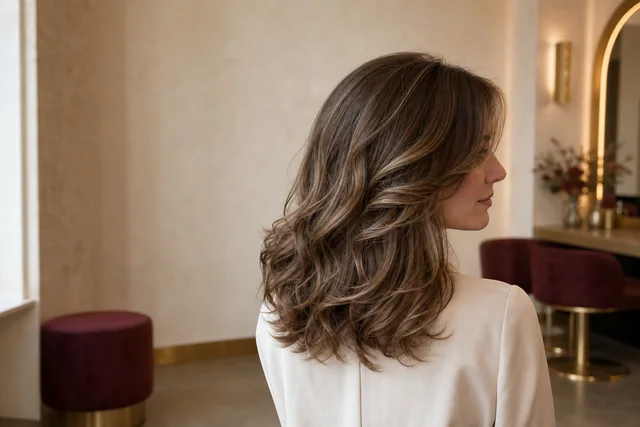
Gentle blow-drying: technique, heat and shape
Salon guidance for controlled blow-drying with heat protection, clear sectioning and practical methods for smooth, fine and curly hair.
Read article -
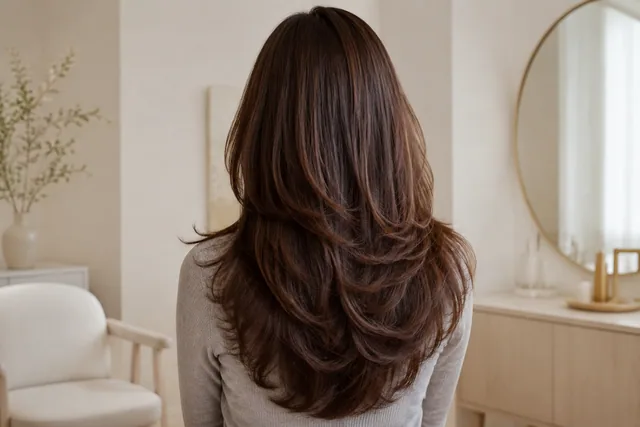
Layers for long hair: movement or a fuller-looking perimeter?
Plan layers in long hair by balancing movement, full-looking ends and face-framing sections. A practical guide to your haircut consultation in Klagenfurt.
Read article