

Glasses are not merely an accessory you put back on after your haircut. Their frames, arms and the way you wear them change the effect of your hairstyle. Hair may also catch on them or obstruct your view. Good coordination therefore starts with your actual everyday glasses and a few simple movements. Fixed rules based on face shape are often less useful than looking closely at the points where your hair and glasses meet.
Bring your glasses and wear them during the consultation
If you use several frames, start with the pair you wear most. Position them normally, rather than moving them higher or lower for the consultation. Show a distinctly different pair of work glasses or sunglasses if you wear those regularly too. A narrow frame with fine arms touches your hair differently from a substantial design. This is practical information, not a question of choosing a supposedly correct style.
Look straight ahead with your glasses on, then turn your head both ways. Where does the hair rest? Which section is pulled when you remove the glasses? Do you need to push the fringe aside to see comfortably? These observations make the discussion more specific. A haircut should work not only in a front-facing mirror but when reading, working and repeatedly putting your glasses on and taking them off.
The fringe and upper frame do not need to follow one line
A fringe can finish above the frame, taper to the side or partially cover the forehead. Which option feels comfortable depends on growth direction, texture and how visible you want the glasses to be. Problems arise mainly when hair keeps getting between your eyes and lenses or is pushed upwards by the frame. Show how the front actually falls in daily life, not only a reference you like.
If you want a longer fringe, consider how it opens around the face. Establish whether the shape holds without daily blow-drying or needs targeted styling. A parting that appears effortless in a photograph may have been carefully prepared. Ask which step at home will support the intended direction. The right length is one you enjoy wearing, not one that follows a general rule about glasses.
The side section can prevent many small annoyances
Behind your ear, hair, spectacle arms and often jewellery share a small space. An awkward length may fan out, become trapped or repeatedly slip forwards. Shorter is not automatically more comfortable: very short hair can stick out against the arm, while slightly more length may tuck back more easily. Frame thickness matters too. Testing your own glasses is more informative than designing the haircut without that contact.
Tuck your hair behind your ear, then let it fall loose again. Repeat on both sides; growth and habits do not have to be symmetrical. Someone who frequently removes reading glasses has different needs from someone who keeps them on all day. Mention hearing aids or other devices if they affect the space available. The hairstyle should not interfere with their safe, comfortable use.
Contrasts can be a deliberate choice
Bold glasses do not demand an understated haircut. Equally, delicate frames do not have to accompany a soft style. The more useful question is what you want to emphasise. Perhaps you want the eye area visible, or enjoy the combination of a strong frame and a clear outline. Describe that preference in your own words. Terms such as harmonious, lively or calm become clearer when you point out a specific detail.
Hair colour adds another dimension. This is not an obligation to match warm or cool tones exactly. Daylight, the effect against your skin and personal preferences also belong in the decision. If you are planning both new glasses and a major colour change, choosing a deliberate order can help. You do not then have to judge several unfamiliar impressions simultaneously. A shape that already suits you can certainly stay.
Test the finish with your glasses on
At the end of a cut, try a short everyday sequence: put your glasses on, remove them, put them back, lower your head and brush the hair aside as usual. Does the outline remain comfortable? Does the front stay in place without constant rearranging? These checks sometimes reveal a small issue that a still mirror image misses. Mention it directly. “The arm lifts this strand” is more useful feedback than a vague sense that something is wrong.
For shorter styles, our guide to a pixie cut with an everyday-friendly outline can help. Curtain bangs are also worth considering for longer front sections. The aim is not to choose a “glasses hairstyle” from a fixed selection. Instead, you combine length, growth direction and the actual frame so that styling remains understandable and wearing your glasses feels entirely natural.
Observe what changes between appointments
If your hairstyle starts bothering you around your glasses, the entire cut does not necessarily need refreshing. Perhaps the fringe now rests on the upper frame while the rest still works well. Or the side has reached a length that turns out awkwardly. Note the specific change and demonstrate it at your next visit. That makes it easier to discuss whether an outline adjustment or a different drying step would help.
If the glasses press uncomfortably regardless of your hair, their fit needs attention from an optical professional. A haircut cannot replace a frame adjustment. Conversely, you should not have to wear well-fitting glasses incorrectly for your hairstyle. At Haarstudio Style in Klagenfurt, you can discuss your hair with your everyday pair in place. The practical test is simple: you should be able to see, move and wear the style without constantly readjusting it.
Frequently asked questions
Can I have a fringe with large glasses?
Yes, provided its length, opening and growth direction suit the frame and how you wear it. The size of the glasses alone is not decisive. Check whether hair obstructs your view or is pushed upwards unintentionally by the frame.
Should I tuck my hair behind the spectacle arms?
There is no general requirement. Test which position stays comfortable without pulling. A side section can be planned loose or tucked back. If you often alternate, both ways of wearing it should be included in the consultation.
Do new glasses mean I need a new haircut?
Not necessarily. Sometimes a different parting or a small fringe and side adjustment is enough. Wear the frames in everyday situations and observe what genuinely bothers you before deciding on a bigger change.
Continue reading in the journal
Keep reading, at your own pace.
Four selected guides that explore related questions.
-
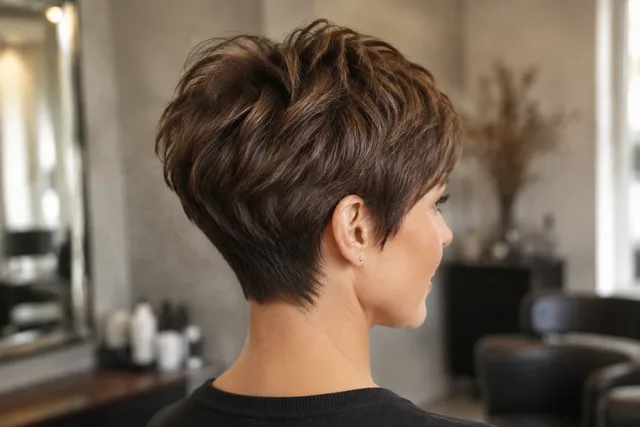
The pixie cut: short hair that fits your everyday life
Planning a pixie in Klagenfurt? Explore the outline, top length and styling routine that suit you before taking the step towards a short haircut.
Read article -
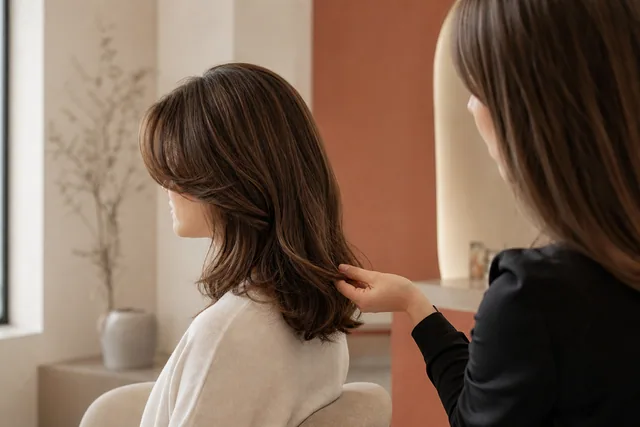
Curtain bangs in Klagenfurt: cutting, styling and growing out
How to adapt curtain bangs to texture, parting and daily life, including styling, care and sensible trim planning.
Read article -
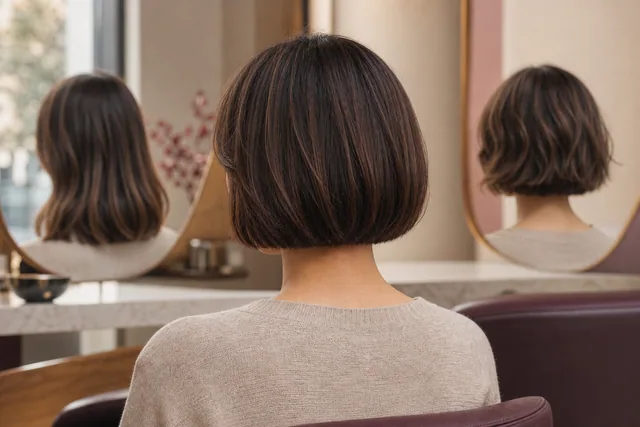
Bob hairstyles: which shape suits your hair and routine?
From chin-length bob to lob: how length, outline, texture, fringe and styling time shape the right choice.
Read article -

Everyday life with a wig: try glasses, clothing and comfort
A wig should work with glasses, collars and daily activities too. Prepare for the fitting and explore its comfort, handling and specific care needs.
Read article