
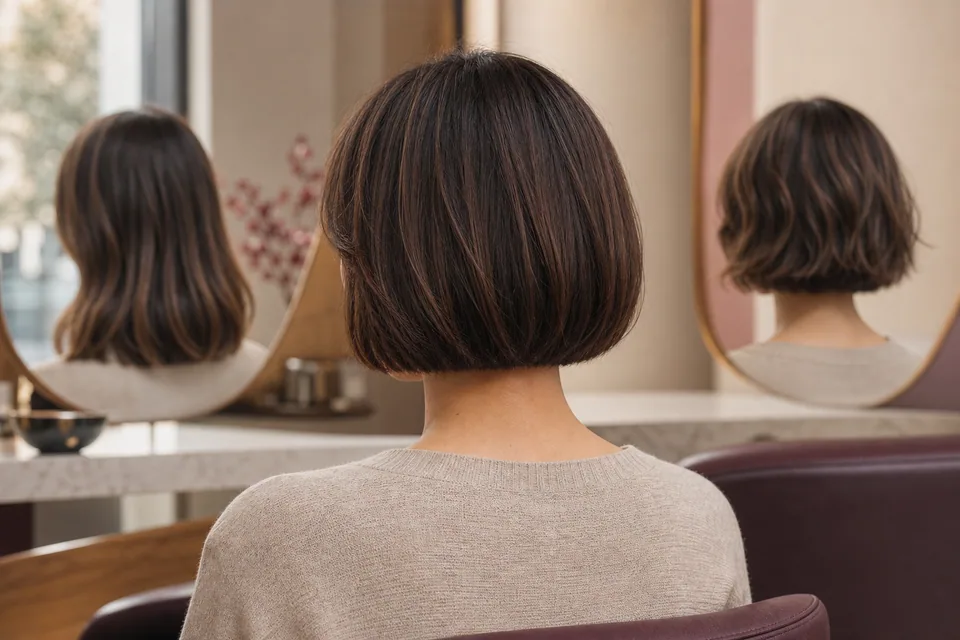
A bob can be compact, soft, layered, short or nearly shoulder-length. The strongest version does not come from a rigid face-shape rule but from proportion, texture, growth patterns and the way you want to wear it every day.
Choose length and outline deliberately
The chin, jaw, collarbone and shoulder are useful reference points where a bob behaves differently. A few centimetres can decide whether the ends fall freely, kick out or can be tied back comfortably.
A compact baseline suggests density, while a softer or lightly graduated outline allows more movement. We assess the nape, crowns and natural direction before deciding on the shortest point.
Work with texture rather than a template
Fine hair can appear fuller with a clear line but does not automatically need a completely blunt cut. Coarse, wavy or curly hair needs balanced weight so the shape does not become unintentionally triangular or overly wide.
Density matters too: many fine strands behave differently from fewer coarse strands. A personal cut considers that combination rather than relying only on labels such as fine, thick, straight or curly.
Connect the fringe, parting and front
A blunt fringe, curtain bangs or long face-framing sections alter the entire bob. The choice should account for hairline growth, glasses, preferred parting and your willingness to style it regularly.
For maximum flexibility, a longer front that tucks behind the ear is often a comfortable start. Shorter designs make a stronger statement but usually need more frequent checks to keep the line intentional.
Be honest about care and styling time
A precise bob can be straightforward but is not automatically wash-and-go. A polished surface, defined waves and natural curls each require different drying methods, tools and product amounts.
At Haarstudio Style in Klagenfurt we demonstrate a realistic routine and explain how the shape will grow. You can then choose between a crisp line, softer lob or moving layers according to your preferred appointment rhythm.
The line defines the character
Compact, soft and layered are different constructions
A blunt bob retains weight and creates a clear edge, while a softly graduated or layered version distributes movement differently. The choice is not simply a trend label. It depends on density, texture, desired volume and whether you want the outline to look graphic, relaxed or easy to tie back.
Length is assessed in relation to the jaw, neck, shoulders and natural shrinkage. A small change can alter where the ends turn or rest on clothing. We agree the line before cutting and take the hair’s dry behaviour into account.
Consider cowlicks, parting and glasses
The outline must be allowed to move with natural conditions
A nape cowlick, strong side parting or growth around the temples can make two sides behave differently. Glasses and the habit of tucking hair behind the ears also change the front outline. Rather than cutting against these facts, we adapt weight and length so that the shape remains more stable.
Show the parting you use most and mention if you change it frequently. If you wear glasses every day, keep them on during the final check. The cut should work with your real proportions and accessories, not only with a temporary salon position.
Remove weight differently in fine and dense hair
Volume does not automatically come from as many layers as possible
Fine hair can appear fuller with a clean perimeter and carefully limited internal movement. Too many short layers may make the ends look sparse. Dense hair may need strategic weight removal so that the shape does not become triangular, but indiscriminate thinning can create frizz or short pieces.
Texture matters as much as density. Waves and curls can lift the line as they dry, while straight hair reveals every change in the edge. The sectioning and technique are chosen for the effect required rather than applied as one standard bob formula.
Simplify styling at home
A good cut still needs a suitable basic routine
Ask how the roots should be directed and whether a paddle brush, round brush, diffuser or simply the hands best supports the shape. Start with thorough, controlled drying before reaching for a straightener. The lowest effective heat and fewer passes help reduce unnecessary stress.
Use styling products for a clear purpose: smoothing, texture, hold or separation. Apply a small amount and build if needed. A bob that relies on multiple products and a technique you do not have time to repeat should be adapted during the consultation.
Regrowth and cutting intervals
The shape changes gradually, not on one fixed date
A precise jaw-length line may show growth sooner than a softer, longer bob. Density, growth rate and the way the ends meet the shoulders also affect when the shape feels different. There is no single correct interval for everyone.
Watch where the bob first loses balance: the nape becomes heavy, the front drops, or movement disappears. This feedback helps set a useful next appointment and refine the cut. If you decide to grow it out, planned intermediate shapes can keep the process intentional.
Frequently asked questions
Can a bob suit every face shape?
Length, volume, parting and the front can adapt a bob in many ways. A discussion about proportion, natural fall and desired effect is more useful than a blanket rule.
Does a bob work with curls?
Yes, when shrinkage, density and weight distribution are considered. Agree on the dry target length and preferred width before the cut.
How often does a bob need trimming?
Very precise short lines usually lose their shape sooner than a longer, softer lob. Growth, the nape and your preference for a crisp outline determine the individual schedule.
Which bob works with a nape cowlick?
The length, weight and graduation must be adapted to the strength and direction of the cowlick. Seeing the hair in its usual state is more useful than choosing a standard bob name.
Does a bob require daily straightening?
No. It can be designed for smooth, waved, curly or air-dried texture. The cut and styling guidance should reflect how you actually want to wear it.
Continue reading in the journal
Keep reading, at your own pace.
Four selected guides that explore related questions.
-

Growing out short hair: keep a shape through the transition
Growing out short hair? Plan the nape, sides and top deliberately, with practical transitional styling and individual haircut advice in Klagenfurt.
Read article -
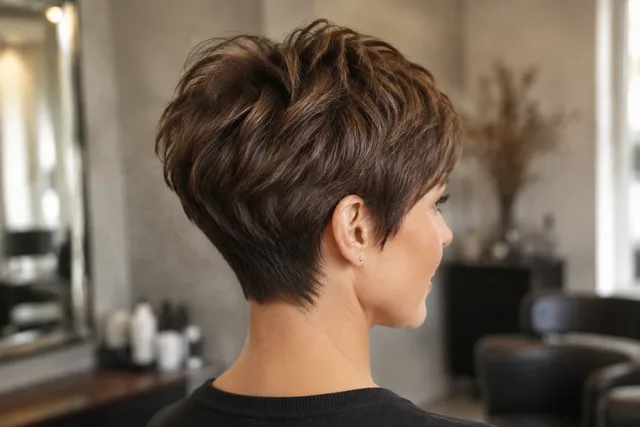
The pixie cut: short hair that fits your everyday life
Planning a pixie in Klagenfurt? Explore the outline, top length and styling routine that suit you before taking the step towards a short haircut.
Read article -

Hair with glasses: plan your fringe, sides and frames together
Which hairstyle works with your glasses? Coordinate the fringe, sides and frame arms through practical checks and individual haircut advice in Klagenfurt.
Read article -

Layers for long hair: movement or a fuller-looking perimeter?
Plan layers in long hair by balancing movement, full-looking ends and face-framing sections. A practical guide to your haircut consultation in Klagenfurt.
Read article