

You have decided: your hair is going to be longer again. A few weeks later, the nape seems to be growing faster while the front still lacks length. This often reflects the different starting lengths in a short haircut. The answer need not be a complete reset or months of putting up with it. A clear intermediate goal helps you decide which sections should grow and where a small shape adjustment would genuinely make life easier.
A reachable intermediate goal helps more than the final photograph
A shoulder-length reference points you in a direction but does not explain the next step. First consider the shape that seems attainable next: a softer pixie, a more complete section around the ear or a short bob. Intermediate references make progress visible. They also help identify the sections that matter most for the next shape and should not be shortened out of habit at a maintenance appointment.
Explicitly explain that you are growing your hair out, not maintaining the previous short cut. It sounds like a small distinction, but it changes the priorities. A very neat short outline can look good while repeatedly removing length you will need later. Show your current hair from several angles and identify the phase that bothers you most. That gives a basis for a limited, purposeful adjustment.
Why the nape often needs attention first
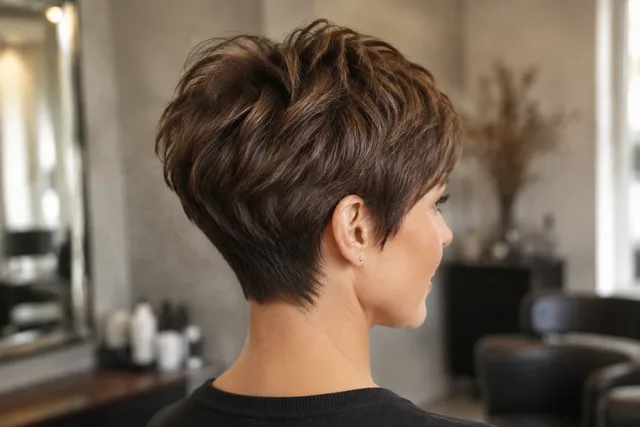
Many short styles have different lengths at the sides, crown and nape. As the hair grows, those differences initially remain. The nape may touch your collar before the front reaches behind your ear. That is not necessarily unusually fast growth; it may simply reflect the original structure of the cut. A new overall plan is more helpful than comparing individual areas in isolation.
Whether the nape should be balanced slightly depends on your next intended shape. A calmer lower outline may help with a future bob; a deliberately longer nape style has different aims. The important thing is to cut only where the benefit is clear. Ask: “Which length are we leaving untouched today, and which outline are we changing?” That agreement is easy to evaluate once the cut is finished.
The ear and front sections often need separate solutions
Hair that has just reached the ear may fan out or catch behind glasses. A small change in drying direction or a discreet clip can bridge this stage without immediately shortening the entire side. Try whether the section falls more comfortably forwards, sideways or loosely back. Do not force a direction with strong tension; the temporary solution should remain comfortable in everyday use.
A growing fringe does not always require another fringe cut either. A softer transition into the sides may be possible if enough length is available. Show whether you want a centre or side parting. Your previous parting is not a lifelong commitment: a different division may feel easier as the hair grows. What matters is that the hair does not constantly obstruct your vision or become trapped under accessories.
Use a few tools instead of fighting your hair every day
A transitional style does not require a full wash every morning. Sometimes dampening a flattened section and drying it in the intended direction is enough. Use suitable heat and distance rather than repeatedly treating the same area at a very high temperature. The aim is a wearable arrangement, not making every unexpected movement invisible. A slightly softer finish can support a shape that is growing out.
Small clips, a loose headband or a different parting can be useful. Make sure nothing hurts or constantly pulls on the same spot. Product quantity is worth reviewing too: heavy wax can behave differently in longer sections than in your original pixie. Try less first. A small amount of a familiar product is easier to assess than several new layers applied together.
Cutting changes the shape, not the growth rate
Trimming the ends does not make hair grow faster at the scalp. It can improve an uneven outline or remove worn ends, however. How often that is useful depends on their condition and your intermediate goal, not on a general promise. Removing an equal amount everywhere at every visit can unnecessarily delay a longer style. Never mentioning an awkward section may leave you wearing it longer than necessary.
Our guide to useful haircut intervals offers further criteria. When growing hair out, add one simple observation: is the current shape still comfortable, or is a particular outline preventing the next stage? Arrange a focused discussion about that area rather than a trim without a clear purpose. This lets you preserve length deliberately without ruling out all shape maintenance.
Recognise progress through what your hair can do
Progress is not only visible on a tape measure. Perhaps a side now tucks securely behind your ear, the parting moves more freely, or a small clip holds without tension. These are useful milestones. An occasional photograph in similar light and posture can make the development clearer for you. It does not need to be shared publicly or stored by the salon to serve as a personal reference.
If you would like help maintaining the transition in Klagenfurt, tell Haarstudio Style explicitly that you are working towards a longer cut. Bring a current photograph and a realistic intermediate reference. A consultation can identify which adjustment may help now and which length is better left to grow. It cannot guarantee the date your desired hairstyle will be ready, but an understandable next step makes the transition more manageable.
Frequently asked questions
Should I visit a hairdresser while growing my hair out?
It can help when a particular outline becomes awkward or you want to prepare the next shape. Explain beforehand that you wish to retain length. A targeted transitional cut is different from recreating your old short style.
How long does it take to grow a pixie into a bob?
That depends on the starting lengths, your individual growth and the type of bob you want. A reliable timescale cannot be given without assessing the hair. The longest section alone says little if another area still needs considerably more length.
What if I dislike the intermediate length?
Identify what bothers you as precisely as possible: nape, ears, fringe or daily styling. A limited change may be possible without cutting everything back. A sudden major correction is not the only way to regain a more comfortable shape.
Continue reading in the journal
Keep reading, at your own pace.
Four selected guides that explore related questions.
-
The pixie cut: short hair that fits your everyday life
Planning a pixie in Klagenfurt? Explore the outline, top length and styling routine that suit you before taking the step towards a short haircut.
Read article -

Bob hairstyles: which shape suits your hair and routine?
From chin-length bob to lob: how length, outline, texture, fringe and styling time shape the right choice.
Read article -

How often should you cut your hair? Useful intervals by style and goal
A nuanced guide to cutting intervals for short hair, bobs, long hair, curls, fringes and growing-out styles without a rigid calendar rule.
Read article -

Layers for long hair: movement or a fuller-looking perimeter?
Plan layers in long hair by balancing movement, full-looking ends and face-framing sections. A practical guide to your haircut consultation in Klagenfurt.
Read article