
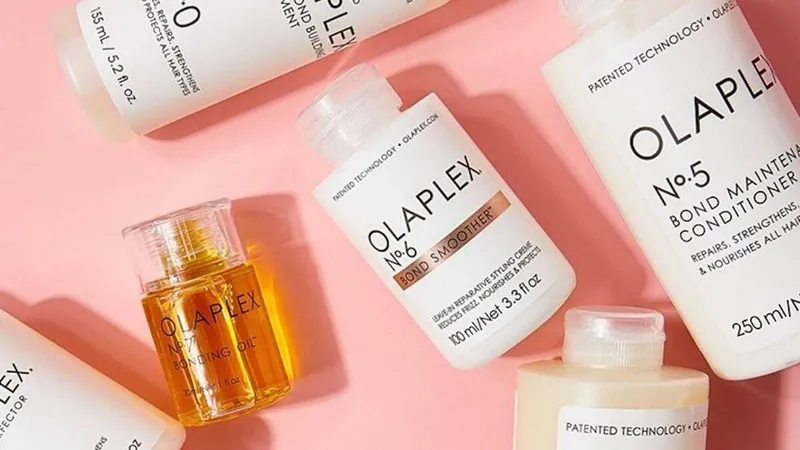
Olaplex is often associated with stressed or chemically treated hair. Its use becomes meaningful when the starting condition, planned service and everyday care habits are considered together rather than treating one product as a cure-all.
Understanding the treatment
Cosmetic support is not the same as complete repair
Olaplex belongs to a category of products designed to support bonds within the hair structure. Depending on the product, a salon may use it within a colour process or as a separate care step.
That does not mean every form of damage can be reversed or that a needed haircut becomes unnecessary. A sound assessment distinguishes rough texture and dryness from mechanical breakage and severely weakened areas.
When it may be a useful option
Hair history and daily habits belong in the assessment
Bond-supporting care can be a useful addition for bleached, frequently coloured or regularly heat-styled hair. Before a larger change, an assessment also helps the stylist understand accumulated stress rather than relying on appearance alone.
Not every texture needs the same intensity or product combination. Fine hair, curls and strong coarse lengths behave differently, so quantity, processing time and finish should be chosen individually.
How the salon service is planned
The technical process and hair condition determine how it is used
The consultation covers previous chemical services, daily routines and the result you want. During colour work, Olaplex is included only when it fits both the technical process and the condition of the hair.
Shine immediately after rinsing is not the only sign of a well-balanced treatment. Detangling, elasticity and the way the hair behaves during drying also inform the recommendation for future care.
A stand-alone salon treatment
Bond care does not always have to accompany a new colour
If the hair feels difficult to detangle or has been stressed by previous chemical services and frequent hot styling, a separate salon treatment may be considered. We first look at elasticity, the ends and the overall handling so that the appointment responds to a real need instead of repeating a fashionable step by default.
The treatment can support feel and manageability, but the result remains individual. Severely split or broken ends may still need to be cut. We explain whether bond care, moisture-focused conditioning, a trim or a change in handling is the most useful next step for the condition we see.
Distinguish bond care, moisture and cutting
Similar symptoms can require different answers
Hair may feel rough because of chemical stress, surface build-up, dryness, friction or ends that are simply worn out. These situations can look similar in the mirror but do not automatically respond to the same product. A short assessment helps avoid layering several treatments without knowing what each is meant to do.
Conditioner can improve slip, a targeted treatment can support the hair fibre and a suitable cut can remove areas that no longer hold a stable shape. These steps are not competitors. They can complement one another when each has a clear purpose and the overall routine remains manageable.
Continue care at home without overdoing it
A focused routine makes it easier to judge what works
Layering several intensive products can weigh down fine hair or make a simple routine unnecessarily complex. A focused plan with suitable cleanser, conditioner, heat protection and one targeted treatment is often easier to maintain.
How frequently an Olaplex product makes sense depends on your hair and everything else you use. Haarstudio Style can suggest practical intervals based on observation rather than applying the same calendar to everyone.
Reduce mechanical and heat stress
Care cannot replace gentle everyday handling
Aggressive brushing, very hot tools and repeated work on the same section can undo the benefit of a carefully selected treatment. Detangle from the ends upwards, use heat protection where appropriate and choose the lowest effective temperature. Wet hair deserves particular care because force and stretching can make vulnerable areas more apparent.
Small changes are easier to maintain than a complete overhaul. Dry the roots and attachment-free lengths thoroughly, use a suitable brush and avoid holding a hot tool in one spot. If the hair continues to break or the scalp is uncomfortable, cosmetic care should not delay professional medical assessment where needed.
Observe results and adjust the plan
Follow-up visits are for feedback, not automatic repetition
Notice how the hair behaves during washing, detangling and styling after the service. The most useful information is practical: whether knots form less readily, whether the ends still feel weak and how long the improved handling lasts under your normal routine. This feedback helps us distinguish a helpful step from a short-lived surface effect.
The next appointment does not have to repeat the same treatment automatically. Hair condition, future colour plans and your experience at home can lead to a different interval or a simpler approach. The aim is a proportionate plan that supports the hair without overpromising what any single product can achieve.
Frequently asked questions
Is Olaplex only for bleached hair?
No. It can also be considered for hair stressed by other chemical or mechanical processes. Suitability depends on its condition and the service being planned.
Can Olaplex completely repair split ends?
Severely split or broken ends cannot be permanently restored by care alone. Products may improve feel and manageability, while a focused trim may still be the sensible step.
Can Olaplex be combined with colour?
Depending on the colour service and hair condition, it may be combined. The exact use should be agreed during the consultation and matched to the technical process.
How often should I use Olaplex at home?
Follow the product instructions and the routine agreed for your hair. More frequent use is not automatically better; the useful interval depends on condition, other products and the chemical or mechanical stress involved.
Continue reading in the journal
Keep reading, at your own pace.
Four selected guides that explore related questions.
-
Reducing hair breakage: recognise stress and adjust the routine
A practical guide to friction, heat, chemical services and the difference between breakage and shedding.
Read article -

Considered hair care in the salon and at home
A guide to a manageable routine, targeted product use and planned salon services without unsupported environmental claims.
Read article -

Blonde consultation in Klagenfurt: shade, technique and care
A transparent guide to starting point, lightening, tone, root planning and care without unrealistic promises.
Read article -
How to wash your hair properly: a routine for scalp and lengths
Detailed salon guidance on wash frequency, shampoo, conditioner, rinsing, drying and keeping your product selection manageable.
Read article