
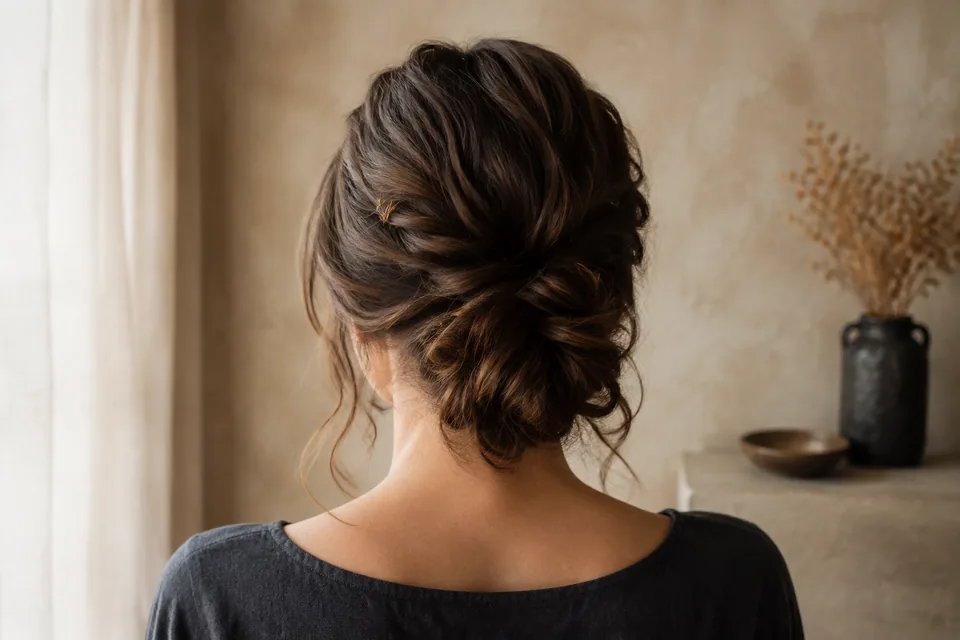
Worn loose, extensions blend into the hairstyle, but the first high ponytail suddenly reveals different areas. That is a good reason to discuss your favourite updos before fitting. Attachment placement and the directions in which hair can move comfortably influence the possibilities. For everyday use, the best choice is therefore not the most complicated hairstyle, but one that suits the fitted system and can be worn without uncomfortable pulling.
Your future hairstyles belong in the first consultation
Before planned fitting, show how you normally gather your hair: a high ponytail, low bun, half-up style or large clip. These move the hair in different ways. A frequently worn high ponytail is a different requirement from occasionally taking it loosely back. Placement should therefore be considered with more than loose hair in mind. This discussion can clarify expectations without promising complete invisibility during every movement.
If extensions are already fitted, follow the instructions you received. Ask before redirecting sections more strongly than usual or fixing accessories directly around attachments. Different systems do not all permit the same handling. General videos often show neither the actual fitting nor the condition of the natural hair. A style that looks effortless on another person is not automatically a suitable arrangement for your attachments.
A loose trial reveals more than a tightly pulled ponytail
First gather the hair in the intended direction without strong tension. Check whether individual areas feel different or an attachment lifts unnaturally. If even this loose trial pulls, do not simply tie it tighter. Try another position or have the option assessed professionally. A higher position is not a sign of quality if it can only be maintained through pressure and constant retightening.
Look at the style from behind and the side, ideally using a second mirror. Visible attachments are initially a reason to assess position or coverage. They need not be concealed with ever more product or stronger pulling. Depending on the system and available covering hair, a lower or half-up arrangement may work better. The suitable option is easier to explain from the actual fitting than through a universal ponytail rule.
Do not use attachments as anchors for clips or jewellery
Pins, clips and accessories should not be pushed indiscriminately through attachment areas. They can press, catch or pull when removed. Start with a simple arrangement using few pieces and check where each item sits. A smooth accessory without damaged edges is easier to handle than one whose decoration repeatedly catches individual hairs. More jewellery does not automatically make an everyday style more secure or comfortable.
Hair ties should also suit the amount of hair and hold it without excessive tightening. A material label alone cannot guarantee comfort; size, condition and the way you wear it matter too. Release the fastening calmly instead of dragging it through tangled hairs. If something catches, relieve tension in that area and free it patiently. A hurried movement can create unnecessary pulling, especially in sections you cannot easily see.
An updo should hold without pain
A hairstyle does not need to hurt to stay in place. If you experience pain, a headache from tension or scalp irritation, carefully release the updo and relieve the pressure. If symptoms remain or involve the fitting itself, seek prompt professional assessment; significant or persistent symptoms also need medical advice. Do not wait for your scalp to become accustomed to uncomfortable pulling.
Attachments should not be removed at home with improvised solvents or tools. Releasing a pulling updo is different from removing the extensions. If you are unsure what causes the discomfort, describe the situation precisely: when it began, which style you were wearing and the area involved. This helps a focused assessment without claiming to diagnose the cause from a distance.
Account for moisture and movement during the day
Sport, travel and showering change the condition of your hair. Damp sections should not remain tightly compressed for long periods; follow the drying advice for your particular system. If you need to leave shortly after washing, allow sufficient time. A firm updo should not routinely conceal that attachments and lengths have not yet been prepared as recommended for the fitting you have.
Our guide to everyday care for extensions develops these points. Consider the end of the day too: can you release the style without pulling and then organise the hair? For frequent tying up, a simple option is often more valuable than an elaborate arrangement. If needed, move to a comfortable position instead of repeatedly tightening the same strained area throughout the day.
Practise a suitable everyday style together
At an appointment, ask to discuss one or two options suited to your fitting. Bring the accessory you actually intend to use if helpful. What matters is not only the finished look but the process: where is the hair gathered, which areas remain loose, and how is the fastening released again? A clear demonstration is easier to repeat later than a large collection of complicated instructions.
At Haarstudio Style in Klagenfurt, mention your preferred styles during the consultation for lengthening or thickening. If your routine changes later through sport or frequent updos, raise that at the next check too. Attachments grow out with your own hair, so a previously suitable position may need reassessment. The aim is a wearable solution with realistic limits, not a promise that every hairstyle can always be created with invisible connections.
Frequently asked questions
Can I always wear a high ponytail with extensions?
That depends on the system, placement, covering hair and comfort. Mention a high ponytail as a wish before fitting. If attachments show or tension develops, another position may be preferable. Complete invisibility cannot be guaranteed in general.
Is some pulling normal when I first wear an updo?
Pain or noticeable tension should not be accepted as necessary adjustment. Carefully release the style and relieve the area. Persistent or recurring symptoms need professional or medical assessment. Do not remove the extensions yourself with improvised methods.
Which clip is suitable for extensions?
No clip is universally suitable for every fitting. It should match the amount of hair, have no damaged edges and avoid pressing on attachments. If necessary, have its intended position assessed in relation to the system you wear.
Continue reading in the journal
Keep reading, at your own pace.
Four selected guides that explore related questions.
-
How to care for extensions: washing, daily life and check-ups
A practical aftercare guide for hair extensions, from gentle brushing to timely salon maintenance.
Read article -
Extensions for volume or length: which goal suits you?
More fullness or extra length? Compare hair thickening and lengthening through your goals, existing hair and daily routine before advice in Klagenfurt.
Read article -
Protecting long hair at night: care without a complicated ritual
Salon guidance on detangling, dry lengths, loose hairstyles, pillowcases and a realistic morning routine for long hair.
Read article -
Wedding hair in Klagenfurt: relaxed planning, confident wear
From trial and accessories to timing and weather, a practical guide to creating a personal bridal hairstyle.
Read article