
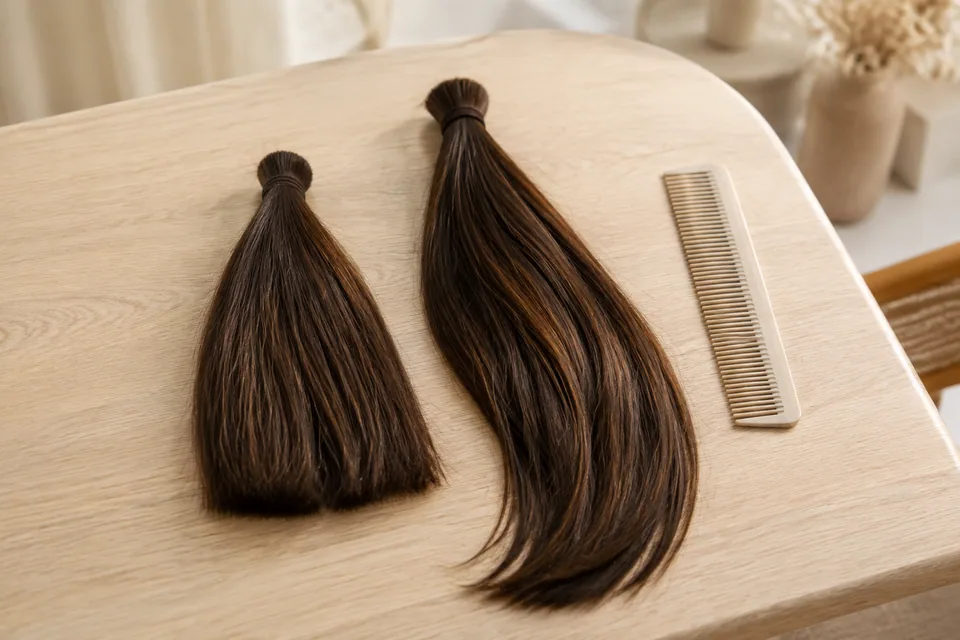
You want fuller-looking ends but actually like your current length. Or you want noticeably longer hair and assume extra fullness will follow automatically. Both wishes may involve adding hair, yet they are not the same goal. Thickening focuses mainly on the fullness you want; lengthening focuses on additional length. Deciding which approach is suitable at all begins with your existing hair, not with adding the largest possible amount.
Describe the wish without naming a method
Start by explaining what you want to change in the mirror. “My ponytail looks too narrow” describes a different aim from “I want loose hair well below my shoulders”. Wanting a more solid line at the ends is another specific question. These descriptions help evaluate the goal before discussing a particular application. Additional length is not automatically necessary simply because supplementary hair is being used.
A simple thought experiment may help: would you keep the current length if it looked fuller there? If so, fullness probably matters most. If you would prefer longer hair even with the same apparent density, length is the main priority. You can want both. In that case, discuss which matters first and what a realistic relationship between length, added quantity and your own hair might look like.
Fullness cannot be added identically in every area
Thin-looking ends may relate to the cut, texture or worn lengths. Reduced density at the crown is a different starting point. Added hair cannot be attached arbitrarily wherever you would like more fullness in the mirror. It needs suitable conditions and placement that work with your own hair and the way you wear it. Describing the target area matters, but does not replace looking at the complete hairstyle.
Before deciding, our guide to fine hair and visible volume may help. A different perimeter or lighter routine may already improve the effect of the ends. Hair thickening is an option, not an obligatory next step for every person with fine hair. New or clearly increasing hair loss, bald areas or discomfort should first be medically assessed; the salon does not make that diagnosis.
Extra length changes transitions and weight
Lengthening needs to do more than make hair longer: it must connect with the existing hairstyle. A very compact short cut presents different demands from already longer hair with softer variations in length. Movement and texture matter too. The transition should look as coherent as possible both loose and gathered. Ordering a particular number of centimetres cannot resolve all of that on its own.
Additional length also means more hair to wash, organise and dry. A substantial change can therefore affect daily life more than the reference photograph suggests. Discuss not only which length looks attractive but which you can genuinely maintain and wear comfortably. A smaller change may be preferable if daily care, sport or frequent updos would otherwise become considerably more complicated.
Your own hair sets limits on quantity and attachment
Condition, existing density, previous treatments and intended placement need to be considered together. Neither fine hair nor a particular starting length produces an automatic yes or no. Similarly, “more strands” is not a general remedy for an uneven transition. The amount should fit the available conditions. A professional assessment may conclude that a smaller addition or, initially, a different haircut would be more appropriate.
Comfort is not a secondary detail. Pain, persistent pulling or an irritated scalp should not be accepted as the price of a beautiful hairstyle. Report such symptoms immediately and have attachments assessed professionally; significant or persistent symptoms also call for medical advice. Do not attempt to release attachments yourself with improvised tools or chemicals. A cosmetic change should not place unnecessary strain on the hair you already have.
Include care and follow-up work in both comparisons
Even a smaller thickening service needs a suitable routine. Less additional length does not mean attachments or supplementary sections need no attention. Ask how to wash, detangle and dry them, and which products belong in which areas. The answers depend on the system actually fitted. General advice covering every kind of extension cannot replace the individual instructions you receive.
Also ask which later checks, adjustments or removals need planning. Comparing only the first appointment’s price is insufficient if ongoing work differs. Specific costs should be explained after the scope has been assessed. No single reliable price covers every quantity, length and starting condition. Mention any new colour plans too, because your own hair, the added hair and its attachments need to be considered together.
The final choice can be smaller than your first idea
Bring a photograph of your usual loose hairstyle and your most frequent tied-up style to the consultation. A few references whose details you can describe are enough. Explain whether fullness, length or a particular outline is the main goal. If several aims overlap, put them in order of importance. You can then discuss a sensible initial scope and what you might be willing to leave out.
Haarstudio Style offers consultations about hair thickening and lengthening in Klagenfurt. The suitable route is not promised from an online description; it needs to be assessed in your existing hair. Ask about alternatives and the limitations of the change you want. Limited thickening, moderate extra length or a different cut for now can each be convincing choices. The important thing is a clear fit between your goal, willingness to maintain it and individual starting conditions.
Frequently asked questions
Does hair thickening have to make my hair longer?
No. The aim can be to make the existing length appear fuller. Whether and how additional hair is suitable depends on the starting point and the area concerned. Explicitly discuss your current length as something you want to retain.
Are hair thickening and lengthening the same method?
The terms initially describe different goals. Depending on the situation, similar or different options may be considered. The suitable attachment and quantity cannot be determined from the service name alone.
Is a smaller thickening service automatically low maintenance?
It may involve less additional hair, but still needs care and checks appropriate to the system. Ask for the workload to be explained specifically. What matters is not only how discreet the result looks, but how comfortably you manage it in everyday life.
Continue reading in the journal
Keep reading, at your own pace.
Four selected guides that explore related questions.
-
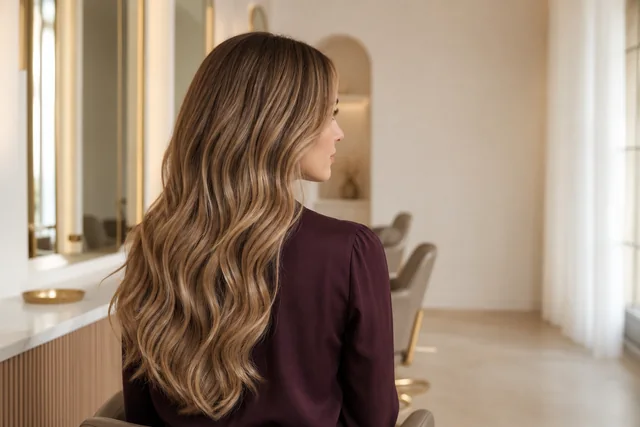
Hair extensions in Klagenfurt: an honest guide before you decide
What matters before extensions: suitability, colour matching, placement, aftercare and the right questions for your consultation.
Read article -

Fine hair: creating visible fullness through shape and routine
Practical guidance on cutting, styling and caring for fine hair without exaggerated volume promises.
Read article -
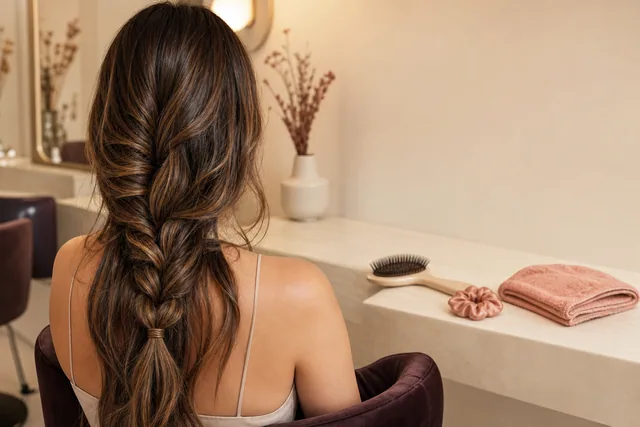
How to care for extensions: washing, daily life and check-ups
A practical aftercare guide for hair extensions, from gentle brushing to timely salon maintenance.
Read article -
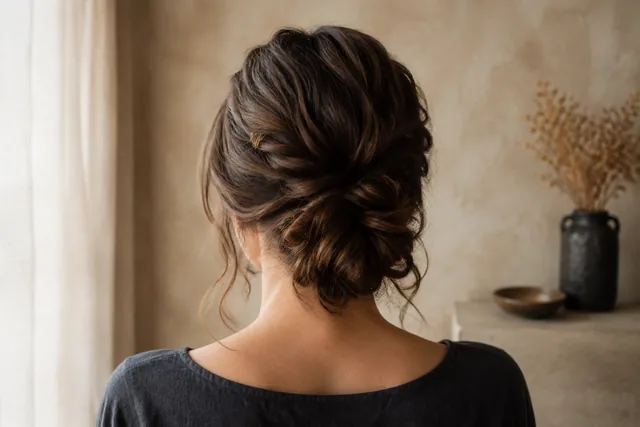
Putting extensions up: consider attachments and comfort
Putting extensions up every day? Consider loose shapes, attachment points and tension, with practical questions for your salon consultation in Klagenfurt.
Read article