

Balayage is not about adding as many light pieces as possible. It works best when placement supports the cut, movement and natural fall of the hair, so at Haarstudio Style in Klagenfurt we first plan the effect, upkeep and wearable grow-out before applying colour.
Matching the starting point to the inspiration
A reference photo communicates a direction, but not automatically the right route to it. Natural colour, previous treatments, porosity, density and the current cut determine how much lift is sensible in one visit and where transitions need particular care.
During the consultation we also decide whether the overall impression should be cool, neutral, beige or warm. Skin undertone, eye colour and favourite clothing shades can offer guidance, while the most important test is whether the result feels right to you in daylight and daily life.
Thoughtful placement, not uniform lightening
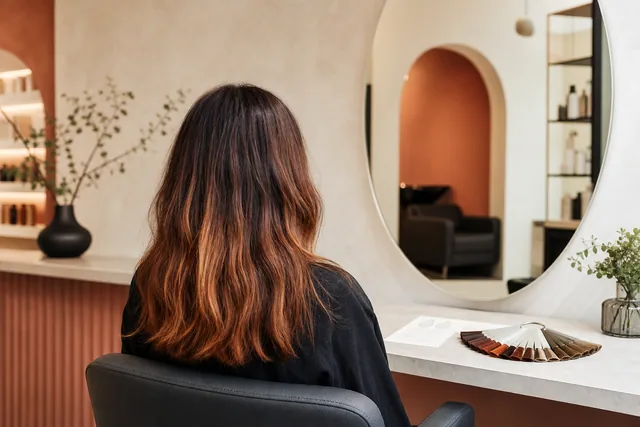
Balayage uses lighter sections to frame features and blend into the base colour. Fine brightness around the face can add freshness, while preserved depth inside the style creates dimension and keeps the hair from looking uniformly blonde.
The technique is adapted to the parting, crown, natural movement and the way you normally wear your hair. Someone who often wears an updo needs different transitions from someone who wears the hair smooth and loose; layers and bobs also change the ideal distribution.
Toner, shine and home care
After lightening, a toner can balance unwanted reflects and refine the chosen shade. Toners gradually evolve with washing, so a gloss service between larger colour appointments may be enough when placement and brightness are still working well.
At home, gentle cleansing, conditioner suited to the hair’s condition and sensible heat protection support the result. Purple or silver shampoo is not an everyday default: overuse can make a tone look dull, so frequency should be matched to the particular blonde.
Refreshing colour without unnecessary stress
A benefit of a soft blend is that the roots can grow out gracefully. The entire balayage does not need to be rebuilt every time; face-framing pieces, the parting area, a toner or a caring trim may be all that is required.
Bring photographs of looks you enjoy as well as examples you do not want. Be open about previous colouring and straightening services, because a complete colour history makes safer planning and realistic stages possible.
Your colour history determines the route
Complete information matters more than a perfect reference image
Reliable planning includes more than the colour visible today. Previous toners, dark permanent colour, plant-based dyes, bleaching and chemical straightening can all affect how individual sections respond to new lightening. A treatment may be long gone at the roots while still present through the lengths, so honest details help prevent avoidable surprises.
For a significant change, a strand test can provide useful information about lift, elasticity and underlying warmth, although it cannot guarantee the response of every hair. At Haarstudio Style, we discuss the starting point and desired result as clearly as possible. This can inform an adaptable plan rather than a promise that goes beyond what the real colour history allows.
Adapt balayage to the cut and daily hairstyles
The best placement is the one that works beyond the salon
Light ribbons behave differently in every shape. They can emphasise movement in long layers, while a compact bob needs more controlled distribution to avoid restless edges. Parting changes, cowlicks and regularly worn ponytails also belong in the plan. Show how you usually tie or part the hair so that the nape and outlines work when it is not worn loose.
The greatest possible amount of light hair is not a quality measure. Deliberately retained depth can support contour, shine and softer regrowth. With fine hair, a balanced ratio is often more convincing than uniform lightening. If you also want a new cut, discuss colour and shape together so that placement reinforces the finished form.
Stagger refresh appointments sensibly
The outline, tone and ends do not always need the same service
A well-planned balayage can often be maintained in modules. A gloss may be enough when placement still works but the reflection has shifted. At another visit, only the face frame or parting may need fresh brightness. This avoids repeatedly processing lengths that are already light and can reduce unnecessary time and stress.
The useful interval depends on growth, washing habits and how polished you want the colour to remain. Occasional photographs in indirect daylight help distinguish a loss of brightness from a warmer tone. Strong filters are poor evidence. We assess the current condition before deciding whether gloss, selected highlights, a cut or a larger refresh is appropriate.
Keep everyday care focused
A few suitable steps are easier to use consistently
Choose a gentle cleansing routine, appropriate conditioning and heat protection for a defined purpose. Product quantity depends on length and density; adding several masks and oils does not automatically protect the colour more effectively. Too much residue can also change movement and make fine hair feel flat.
Water temperature, washing frequency, sun exposure and hot tools influence the development of tone and feel. Concentrate on careful detangling and the lowest effective styling temperature. If the colour appears warmer, do not layer strongly pigmented products without advice, because porosity can make the lengths take colour unevenly.
Prepare correctly before the next colour visit
Clear priorities support honest time and cost planning
When requesting the appointment, state whether your priority is more brightness, a cooler or warmer reflection, softer regrowth or healthier-looking ends. Mention any colour or chemical service since the last visit. A small number of reference pictures can show the direction, but your actual history remains the basis for the plan.
Guide prices depend on density, length, materials and technical stages. A consultation may show that tone, placement and cutting need separate priorities. We agree the proposed work and likely cost range before beginning, and we do not add unplanned steps without discussing them with you.
Frequently asked questions
How long does a balayage appointment take?
Timing depends on length, density, starting colour, desired lift and extras such as a cut or toner. A short consultation allows the salon to reserve a much more accurate appointment window.
Can balayage work on dark hair?
Yes, when the shade and brightness goal suit the starting point. Caramel, hazelnut and beige can be as harmonious as lighter accents, while major lightening may require several careful stages.
How often should balayage be refreshed?
There is no universal schedule. Soft roots can grow out discreetly for longer, while toner, face framing or shine may need attention sooner; growth, desired tone and care routine all matter.
Why might my result look different from the reference picture?
Starting colour, previous treatments, texture, density, lighting and styling all affect the result. A picture guides the discussion, while the practical plan must be adapted to your own hair.
Can balayage become lighter in stages?
Yes. A staged approach can be more responsible when old colour, uneven porosity or the desired degree of lightening makes a single intensive appointment unsuitable.
Continue reading in the journal
Keep reading, at your own pace.
Four selected guides that explore related questions.
-

Blonde consultation in Klagenfurt: shade, technique and care
A transparent guide to starting point, lightening, tone, root planning and care without unrealistic promises.
Read article -

Hair glossing for added shine: what a toner can do
A clear guide to glossing on natural and coloured hair, including tone, limitations, care and refresh timing.
Read article -

Root colour or highlights: which colour plan suits you?
Blend roots, add lighter accents or blend grey naturally: choose a colour plan that suits your hair, preferred contrast and everyday life in Klagenfurt.
Read article -
Colour correction in Klagenfurt: rebuilding colour with control
An honest guide to colour history, strand testing, staged work and care during professional colour correction.
Read article