
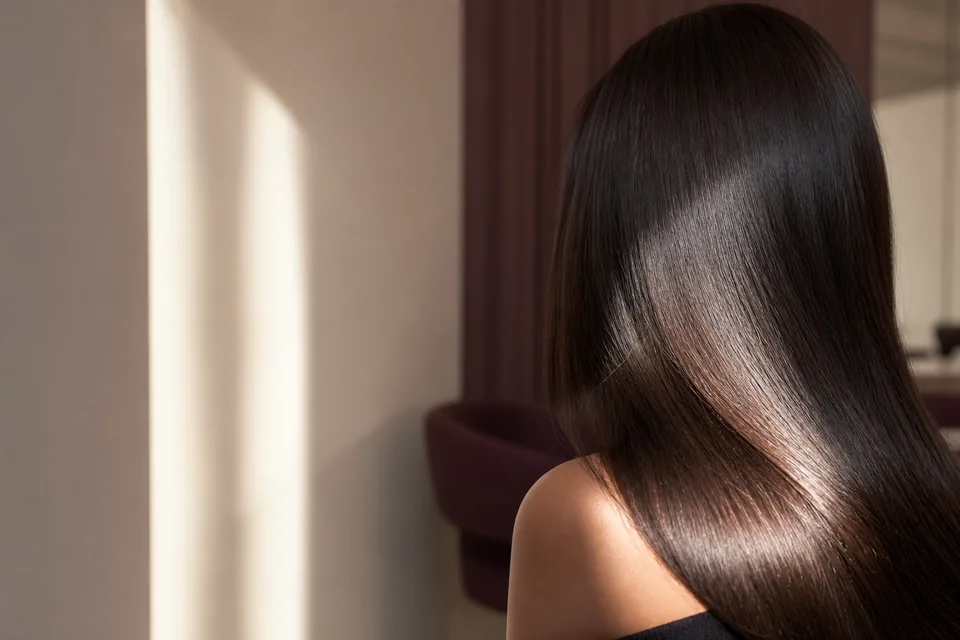
A gloss is a temporary toning service that can refresh reflects and make the surface look more balanced. It is particularly useful when the existing lightness is right but the colour or shine no longer appears as refined as it did after the last appointment.
What a gloss changes – and what it does not
Depending on the formula, glossing can neutralise, add warmth or coolness and visually connect faded lengths. It works with the existing canvas, so the same shade appears different on light, porous and darker hair.
Glossing is not a major lightening process and cannot replace a colour correction. It will not turn distinctly dark roots blonde and may not resolve strong bands or patches; those goals need a broader consultation.
Use it on natural or coloured hair
On coloured or lightened hair, a gloss is often used to refine reflects between larger colour appointments. Depending on the product, natural hair may also gain a subtle tone or shine effect without aiming for dramatic change.
Porous ends often absorb pigment faster or more strongly than stable roots. Professional assessment of the canvas and condition helps balance the formula, application pattern and processing time.
Select the shade together
Cooler does not automatically mean grey, and warmer does not automatically mean gold. Beige, neutral, copper, chocolate and pearl each contain different balances that should work in daylight with the base colour, complexion and desired contrast.
Bring references but treat them as a direction rather than a formula. At Haarstudio Style in Klagenfurt we explain which reflect will show on your current level and when other colour areas would first need to be aligned.
Understand wear and care
Because toner evolves gradually, one wear-time promise cannot apply to everyone. Washing frequency, water temperature, porosity, sun, styling and product choice all influence how long the preferred reflect remains visible.
Gentle cleansing, lukewarm water and suitable care can support the tone. Refresh when the reflect no longer feels right, not automatically by a rigid calendar while the colour and condition are still satisfactory.
What a gloss can do
Refining tone is not unlimited lightening
A gloss can adjust reflection, soften unwanted warmth or add visual depth and shine at the existing level. It is useful when the placement and brightness are still appropriate but the tone no longer feels balanced. It cannot lift dark artificial colour or replace highlights when genuinely more brightness is the goal.
The word “glossing” may describe different product systems, so the consultation should clarify the intended effect and processing. We assess the current colour, porosity and hair condition before deciding whether a gloss, permanent colour, lightening or simply care is the correct service.
Choose the reflection in daylight
Beige, cool, neutral and warm are finely graduated directions
Reference pictures can make the same blonde or brown appear different because of lighting, filters and screen settings. We identify whether you like the brightness, contrast or reflection and compare shades in realistic light. A tone that looks cool indoors may appear softer or warmer in daylight.
Skin tone and personal preference provide context, not strict rules. The best choice is one you enjoy and can maintain. Very cool targets may require more frequent tonal refreshes, while a balanced neutral or beige direction can sometimes change more softly between visits.
Treat porous lengths differently
Evenness may require more than one application approach
Lightened, weathered or repeatedly coloured ends can absorb pigment faster or hold it differently from healthier roots. Applying one formula uniformly does not guarantee an even result. We may adjust shade, timing or placement according to how each area is likely to respond.
Porosity also affects fade. A tone can change more quickly through stressed sections even with careful home care. This is why a fixed durability promise is unreliable. The aim is a controlled result and a routine that supports it, not a claim that every strand will develop identically.
Think about longevity without rigid promises
Washing, water, sun and hair condition work together
A gloss changes gradually with washing. Frequency, water temperature, mineral content, sunlight, heat styling, porosity and product choice all influence how long the desired reflection remains noticeable. Two people with the same salon tone may therefore need different refresh intervals.
Use gentle cleansing, comfortably warm water and suitable conditioning. Strong pigmented home products should be dosed carefully, especially on porous ends. Refresh when the reflection no longer feels right, rather than automatically following a schedule when the colour still looks balanced.
Know when another service is more appropriate
Separate shine, colour correction and lightening goals
If the main concern is worn ends or rough handling, a cut and care plan may matter more than tone. If the colour is patchy, very dark or contains several artificial layers, a corrective consultation is required. If you want a noticeably lighter result, a gloss alone cannot create it.
Describe the desired change and colour history in your request so that the correct appointment length can be considered. During the consultation, we explain which service addresses the actual issue and discuss the guide cost before beginning.
Frequently asked questions
Can a gloss make hair lighter?
A conventional gloss mainly adjusts reflect and shine on the existing level. Noticeable lightening requires a different colour technique and a separate assessment.
Will glossing fully cover grey hair?
Depending on the product, it may tone or blend grey, but it is not automatically full grey coverage. Discuss the desired opacity and starting point before the service.
How long does a hair gloss last?
The effect changes through washing and differs by person. Porosity, care, heat, sun and the selected tone have a major impact, making one fixed interval unreliable.
Is glossing the same as a demi-permanent colour?
The terms and product systems can overlap, but they are not universally identical. Ask which formula and intended effect the salon means in your individual service.
Can a gloss repair damaged hair?
It may improve the surface feel and visual shine, but it cannot permanently repair split or severely broken ends. Care, handling and a suitable cut may also be needed.
Continue reading in the journal
Keep reading, at your own pace.
Four selected guides that explore related questions.
-
Blonde consultation in Klagenfurt: shade, technique and care
A transparent guide to starting point, lightening, tone, root planning and care without unrealistic promises.
Read article -
Balayage in Klagenfurt: naturally blended colour with a plan
A practical balayage guide covering consultation, shade choice, placement, care and realistic refresh intervals.
Read article -
Hair-colour consultation: from desired shade to a realistic plan
A salon guide to reference images, colour history, brightness, reflection, tests, care and transparent stages for a new hair colour.
Read article -
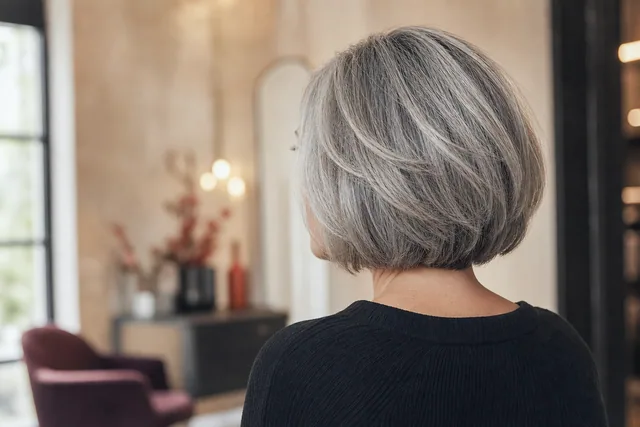
Wearing grey hair with modern confidence: transition, cut and care
A judgement-free guide to naturally grey hair, covering transition strategies, cuts, tone care and practical styling.
Read article