
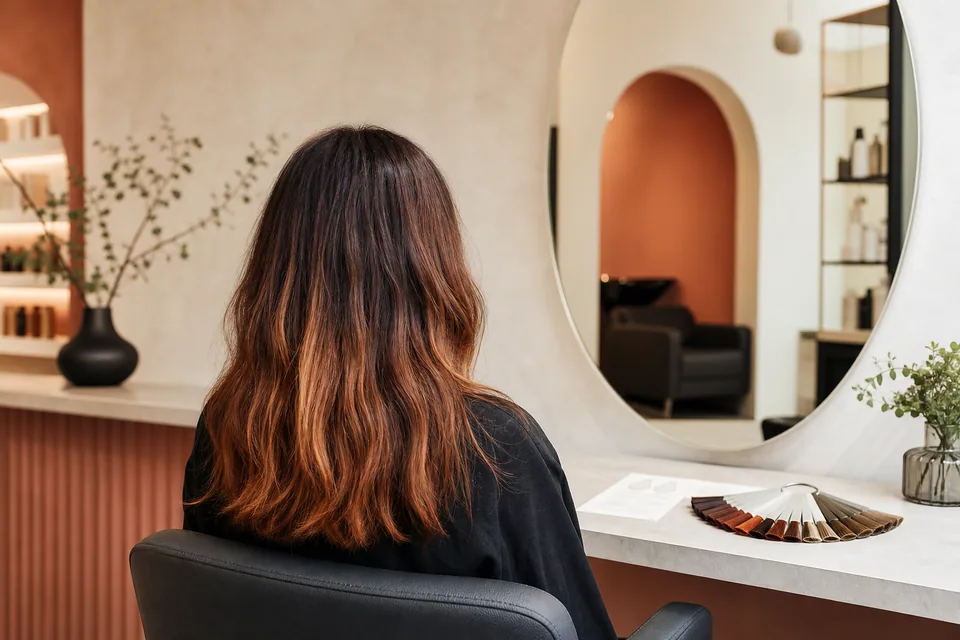
Colour correction may address unwanted tones, uneven areas or an unsatisfactory home result. It is not one standard service but a technical plan that begins with a complete colour history and a realistic goal.
Share the complete colour history
Mention permanent dye, toner, plant-based colour, lightening and smoothing treatments even when they were months ago. Pigments and chemical changes can remain through the lengths and strongly affect the next step.
Bring daylight photographs if the current condition may look different when styled for the visit. Accurate information is more useful than making the history sound simple and helps reduce avoidable surprises.
Put analysis and testing before speed
Porosity, elasticity, uneven zones and breakage are considered before planning. With a complex starting point, a strand test may show how colour lifts, deposits or behaves in the hair.
A test cannot guarantee identical reactions everywhere, but it offers valuable guidance. If the hair cannot reasonably support more stress, the goal must change, wait or be divided into smaller stages.
Neutralise, rebuild or lighten gradually
Warm, green or overly dark areas require different strategies. Sometimes the useful first aim is a more even base before the final desired shade becomes realistic.
A staged plan is not a failure. It can respect colour balance and hair condition more carefully and allows tone and care to be observed between appointments.
Support the result at home
Use gentle cleansing, suitable conditioning and heat protection as advised. Strong clarifying, frequent purple shampoo or another home colour may alter a carefully rebuilt balance.
Toners and artificial pigments continue to evolve with washing. Arrange review according to actual change and ask before trying to counter an unexpected tone yourself.
Correction begins by identifying colour layers
The visible shade tells only part of the history
Roots, mid-lengths and ends may contain different products and levels of lightening. Permanent colour, direct dye, plant-based colour, home applications and old highlights can overlap even when the surface looks uniform. We ask for dates, products and photographs where available and examine porosity and elasticity.
Complete history does not guarantee a simple correction, but it supports safer decisions. If you do not know what was used, say so. Uncertainty is part of the starting point and may lead to a more cautious test or staged plan rather than an aggressive assumption.
Use a strand test and staged plan
A small test gives guidance, not a guarantee for the whole head
A strand test may show how one selected area releases pigment, which warmth appears and how the fibre feels after processing. Other sections can still respond differently because their history and porosity vary. The result therefore informs the plan without promising identical behaviour everywhere.
A useful staged plan names an achievable intermediate goal as well as the long-term direction. The first appointment may focus on reducing an unwanted layer and improving evenness rather than reaching the final reference shade. Hair condition is reassessed before each further step.
Discuss time and cost transparently
Corrections are rarely calculated like a standard haircut
Technical assessment, product removal, lightening, toning, repeated checks, treatment and cutting can all contribute to the appointment. The exact path sometimes becomes clearer only as pigment responds. We explain the proposed first stage, guide range and which decisions may be needed during the process.
No additional work should be assumed without discussion. A consultation may result in a separate testing appointment or a recommendation not to proceed immediately. Budget should include future stages and home care, not only the first visible change.
Document intermediate results in comparable light
Consistent photographs reduce false conclusions
Take simple pictures in indirect daylight without a beauty filter, using a similar background and hair position. Warm indoor lighting and highly processed phone images can make a balanced tone appear very different. Comparable photographs help show whether unevenness, darkness or reflection has actually changed.
The photograph supports, but does not replace, the physical assessment. Feel, elasticity and breakage cannot be judged reliably from an image. Bring your observations about washing and handling to the next appointment alongside any visual record.
Simplify the plan after correction
A stable routine makes later decisions easier
Avoid immediately layering new home colour, strong pigmented masks and several unfamiliar treatments over the corrected result. Use the agreed gentle cleansing, conditioning and heat protection, and observe how the tone and feel develop through normal washes.
Future root or tone maintenance should be planned around the new base. Keep a record of salon and home colour so that the history remains clear. A consistent approach reduces the chance that the next change becomes another correction project.
Frequently asked questions
Can every colour mistake be corrected in one visit?
No. Existing pigments, hair condition and the target determine whether a direct correction is reasonable or several stages are needed.
Why might a strand test be useful?
It shows how one limited area responds to a planned process. It reduces uncertainty but cannot guarantee identical behaviour across every section.
Should I remove colour myself before the appointment?
Not without an agreed plan. Home remedies and removers can change both the colour and condition, so contact the salon before taking another step.
Why is the price of a colour correction difficult to fix in advance?
The work depends on hidden pigment layers, response during testing, product use, time and the number of stages. A consultation can provide a range, but not always a reliable flat fee.
Can colour correction always reproduce the reference picture?
No. The reference guides the direction, while colour history, hair condition and safe technical limits determine what can be achieved and whether stages are required.
Continue reading in the journal
Keep reading, at your own pace.
Four selected guides that explore related questions.
-
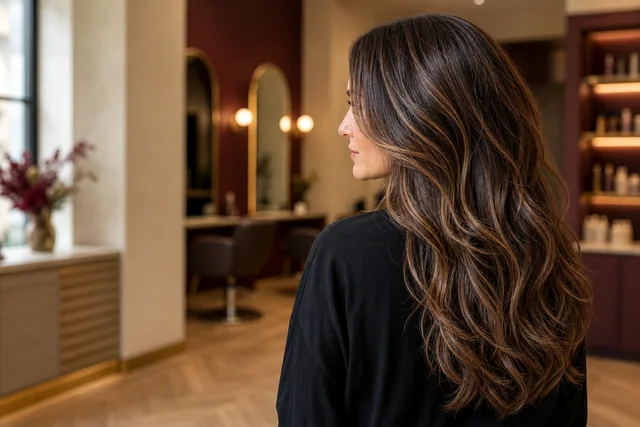
Hair-colour consultation: from desired shade to a realistic plan
A salon guide to reference images, colour history, brightness, reflection, tests, care and transparent stages for a new hair colour.
Read article -
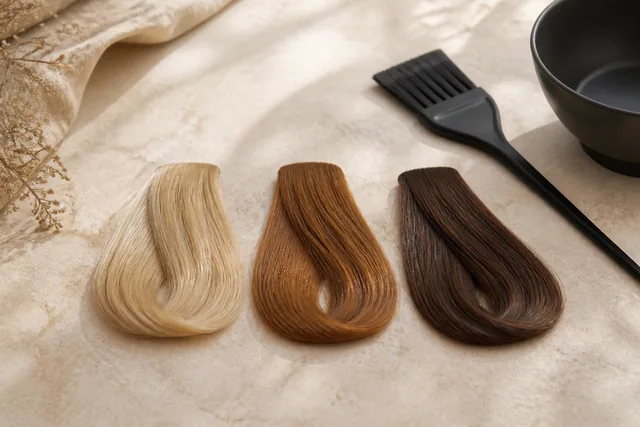
From blonde to brown: plan a darker hair colour deliberately
Colouring lightened hair brown: understand the starting point, plan your desired shade realistically and prepare for a considered change in the salon.
Read article -

Hair glossing for added shine: what a toner can do
A clear guide to glossing on natural and coloured hair, including tone, limitations, care and refresh timing.
Read article -

Reducing hair breakage: recognise stress and adjust the routine
A practical guide to friction, heat, chemical services and the difference between breakage and shedding.
Read article