
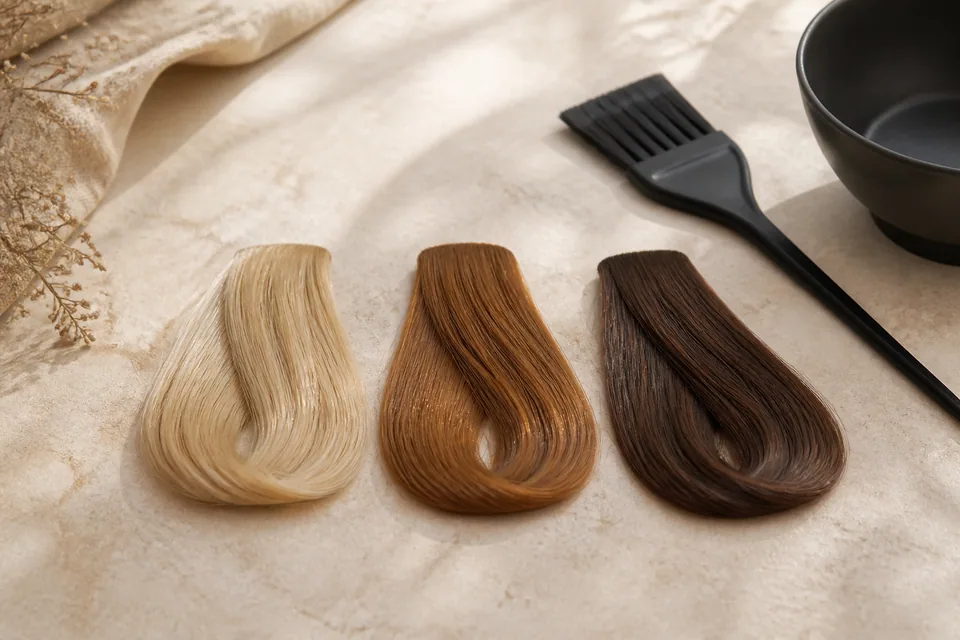
After a long blonde phase, you may want more depth, less brightness around the face or a shade closer to your natural colour. Taking lightened hair to brown is not simply the opposite of bleaching, though. The starting colour, differences between sections and desired shade of brown need to be considered together. A useful plan explains the change and what the new colour means for later decisions.
Brown is not a single colour
A soft light brown and a very dark shade have noticeably different effects. You may also prefer a character you perceive as warm, neutral or cooler. Describe the depth and impression you want, not simply “brown”. A reference photograph in even light is more helpful than a heavily edited image that conceals the actual colour relationships.
Consider what you want to change about the blonde. Should the roots look less contrasting? Do you want to go darker overall or reduce only particular bright areas? You may still like some lightness around the face. These answers help establish whether an even change or a deliberate mixture of shades better reflects your goal.
Lightened lengths have a treatment history
After lightening, the existing base is not simply equivalent to untreated natural hair with the same visible brightness. Previous steps may also be unevenly distributed: very light highlights, darker sections between them and natural roots need not respond identically. The whole head should therefore not be viewed as one uniform starting surface for the next colour.
Describe any lightening, toning, direct dyes or home treatments that may remain in the lengths. A change that has faded can still matter to planning. You do not need a perfect record of every application. An honest overview is more useful than assuming that a colour used long ago must automatically be irrelevant to the new wish.
Why preparing the colour base may be necessary
When taking lightened hair substantially darker, it may be necessary to build the colour base deliberately first. One professional term for this is pre-pigmentation. It does not mean everyone needs the same intermediate shade. Starting lightness, desired depth, hair condition and the colour system used determine the specific approach to preparing the new result.
This is not an instruction to apply a red or orange colour at home as a precaution. An arbitrary extra pigment layer can make subsequent planning harder. Instead, ask why a proposed intermediate step belongs in your plan. Even a neutral-looking final result may need a coordinated base without the intended appearance being deliberately warm afterwards.
Assess evenness and hair condition together
Very light ends, more stressed areas and less-treated sections may feel different and take colour differently. A salon assessment therefore considers the condition of the lengths as well as the shade. For a substantial change, a strand test can provide additional guidance, but does not replace carefully assessing the hair as a whole.
If several old colour zones need balancing, it helps to understand the work as an individual colour correction. This is not unnecessarily complicating a simple wish. It describes bringing different starting points towards one goal, which may require different steps or an adjusted expectation. Knowing that distinction makes the proposed work easier to understand.
Understand what returning towards your natural colour means
A shade can resemble your natural hair without making the treated lengths untreated again. That distinction matters for care and future colour changes. When you say “back to my natural colour”, clarify whether you mean visual similarity, a calmer growing-out transition or eventually stopping further colour treatments. These intentions may lead to different planning discussions.
Perhaps you want to leave the new roots largely alone in future. The chosen depth should then fit that wish instead of unintentionally creating strong new contrast. An old photograph can offer direction, but its lighting may not show colour reliably. Your visible natural regrowth and a shared assessment are more useful for the current decision.
Mention any thought of returning to blonde later
If you are unsure whether brown is your longer-term goal, say so before treatment. Lightening again cannot be planned as a straightforward undo button. Additional colour steps change the starting point and may later require further consultation, time and assessment of the hair’s ability to tolerate the work. Going very dark temporarily is therefore not a neutral decision.
A smaller change or deliberately retaining some lighter areas may be an option to discuss. It is not automatically suitable for every starting point, however. Consider how certain your goal is and which compromises you accept. A useful colour plan accounts for likely wishes over the coming months as well as the next photograph.
Do not leave care and refreshing to chance
Ask for a manageable routine suited to the colour change actually carried out. Cleansing, detangling, appropriate care and restrained styling heat are practical topics. Do not add pigment masks or other colour-depositing products without checking. Something that seemed useful for your previous blonde may not suit the new direction or the different areas now being maintained.
A darker design can change during everyday wear too. When and how to refresh it depends on your hair and agreed goal, so a fixed longevity guarantee would not be particularly useful. Observe which areas change and share that feedback before independently layering more products or colours in an attempt to keep the result identical.
Prepare the consultation with a few clear details
Bring two suitable references and explain what you like in each. Add your colour history, preferred overall length and expectations about future care. Mention an important upcoming event early as well. A substantial change needs room for a considered decision and should not be squeezed into unnecessary time pressure because the occasion is approaching.
At Haarstudio Style in Klagenfurt, you can discuss the depth you want and the starting condition of your lightened lengths. That supports an individual approach rather than a universal brown formula. A well-defined goal is understandable: you know the intended effect, the limits that apply and how to support the new colour in everyday life afterwards.
Frequently asked questions
Can I cover very blonde hair with any brown colour?
An arbitrary colour does not account for the existing base or differences between sections. For a substantial change, assess the starting point first and adapt the approach accordingly. Generic mixing recipes are not reliable guidance for this.
Is my hair untreated again after going darker?
No. A darker visible colour does not reverse previous lightening. The existing lengths retain their treatment history and still need suitable care and considered planning for later changes.
Continue reading in the journal
Keep reading, at your own pace.
Four selected guides that explore related questions.
-
Colour correction in Klagenfurt: rebuilding colour with control
An honest guide to colour history, strand testing, staged work and care during professional colour correction.
Read article -

Blonde consultation in Klagenfurt: shade, technique and care
A transparent guide to starting point, lightening, tone, root planning and care without unrealistic promises.
Read article -

Hair glossing for added shine: what a toner can do
A clear guide to glossing on natural and coloured hair, including tone, limitations, care and refresh timing.
Read article -

Root colour or highlights: which colour plan suits you?
Blend roots, add lighter accents or blend grey naturally: choose a colour plan that suits your hair, preferred contrast and everyday life in Klagenfurt.
Read article