
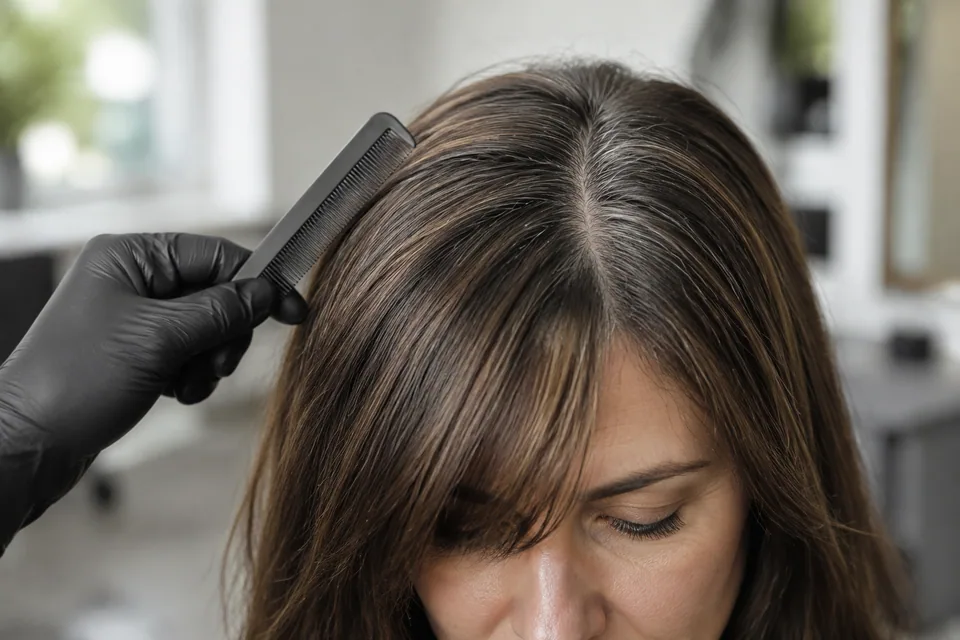
Visible roots do not automatically mean that all your colour needs renewing. You may want to match new growth, add brightness or soften a transition. Root colour and highlights address different needs and can also complement each other. Start with a simple question: what exactly bothers you now, and how would you like your colour to look between salon visits?
Describe the roots more precisely
Look at your roots in ordinary daylight and your usual hairstyle. Is the issue a darker line, a lighter regrowth area or uneven distribution? Perhaps the colour is particularly noticeable at the parting while the rest still looks pleasing. These distinctions help identify a targeted change instead of assuming that a more extensive service is always necessary.
Check whether the concern really involves the roots. Lengths that look duller or warmer are a different issue from newly grown hair. A consistent shade from top to bottom and a style with movement from several tones are also different goals. Describe the appearance you want before deciding which treatment you think must produce it.
What a root treatment is intended to do
A root treatment focuses on newly grown hair, matching it to the existing colour design or deliberately changing its role. This can suit a preference for a calm, even-looking base colour. The appropriate colour type and intensity depend on factors including natural shade, existing colour, desired coverage and the starting condition of the hair.
The lengths therefore need not undergo the same chemical step at every visit. They may remain unchanged or require a different, specifically planned adjustment. Ask which area will actually be treated. This makes the plan clearer and avoids the assumption that refreshing colour always means one identical application from the roots right through to the ends.
What highlights do differently
Highlights change selected sections rather than creating a completely uniform surface. Their effect depends on position, width, brightness and contrast with the remaining hair. Fine accents around the face differ from clearly visible light bands. Your parting and whether you regularly tie your hair back also affect which sections will eventually be on show.
A consultation about hair colour and highlights helps plan the distribution you want. A photograph of loose, waved hair does not automatically show how the same placement would look in a smooth ponytail. Include your usual way of wearing your hair in the discussion, rather than considering only the most attractive moment in a reference photograph.
Grey hair: coverage or deliberate inclusion
Not everyone wants to cover grey completely. Some prefer a quiet base colour; others want a less noticeable transition or wish to retain visible silver areas. Clarify these goals before choosing a technique. “Natural” can describe an even colour or a visible mixture of shades. It is worth explaining what the word means in your own reference.
Lighter accents can redistribute contrast, but do not automatically replace every kind of grey coverage. A darker base is not inherently the better option either. Consider how the result should work with your own regrowth. Explain which visible transition feels acceptable to you rather than adopting a general rule about how grey hair ought to be treated.
Think about contrast between appointments
The greater the difference between your natural shade and chosen colour design, the more noticeable regrowth may feel to you. A high-contrast colour is not necessarily wrong; it should simply fit your expectations and appointment routine. A look you love in its first photograph can still require more attention in everyday life than you want to plan.
Give a realistic outline: are you happy to refresh it regularly, or would you prefer transitions you can wear comfortably for longer? A softer design may be an option, but is not a universal promise of longer-lasting colour. Growth, starting conditions and personal perception vary. A useful plan makes the next step understandable too.
Three starting points to help the decision
First example: you like the lengths and only want the regrowth to match your existing base. The initial question then concerns the roots. Second example: you generally like your natural shade but want more light around the face. Selected sections are worth discussing without immediately deciding to change the whole base colour.
Third example: old dark colour, light ends and new roots coexist, while your reference is very even. That involves more than choosing between two standard services; the history needs assessing first. These examples are not a remote diagnosis of your hair. They show why the same short description of a wish can lead to very different steps.
Discuss colour history and limits honestly
Mention previous lightening, home colour, plant-based hair colours and other chemical treatments. Applications from some time ago may still matter in the existing lengths. An approximate sequence is more useful than a perfectly remembered date. Do not omit a treatment because you worry about being criticised: the relevant history helps make the consultation more informed.
For a bigger change, a close assessment and possibly a strand test may be sensible. Such a test does not guarantee an identical result on every section. It supports deciding whether to pursue the wish now, in stages or in an adapted form. An understandable limit is as much part of useful advice as an attractive colour suggestion.
Bring a specific question to the consultation
Instead of “Which is better?”, ask: “I want these roots to look less obvious while keeping the lengths as they are where possible. What could suit that?” Add your usual hairstyle and preferred home routine. Ask which care guidance fits the colour plan and what adjustment is likely to need discussion at your next visit.
At Haarstudio Style in Klagenfurt, roots, lengths and the way you wear your hair can be considered together. A targeted root treatment, highlights or a combination may follow. What matters is understanding why each area is being worked on. Colour then remains a deliberate part of your look, rather than becoming a complete new decision whenever regrowth appears.
Frequently asked questions
Are highlights always easier to maintain than root colour?
No. Placement, contrast, starting conditions and your preferred appearance determine the upkeep. A softer design can grow out differently from a uniform base colour, but still needs appropriate care and individually planned adjustments.
Can root colour and highlights be combined?
Different colour needs can be planned together in principle. Whether that combination makes sense for your hair depends on the starting point and desired result. It is not an automatically necessary standard service.
Continue reading in the journal
Keep reading, at your own pace.
Four selected guides that explore related questions.
-

Wearing grey hair with modern confidence: transition, cut and care
A judgement-free guide to naturally grey hair, covering transition strategies, cuts, tone care and practical styling.
Read article -
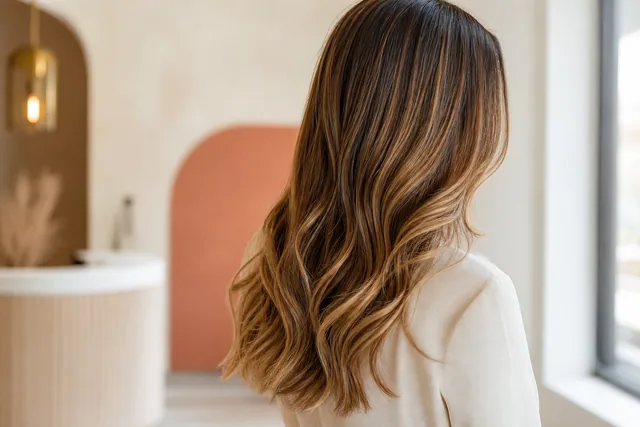
Balayage in Klagenfurt: naturally blended colour with a plan
A practical balayage guide covering consultation, shade choice, placement, care and realistic refresh intervals.
Read article -
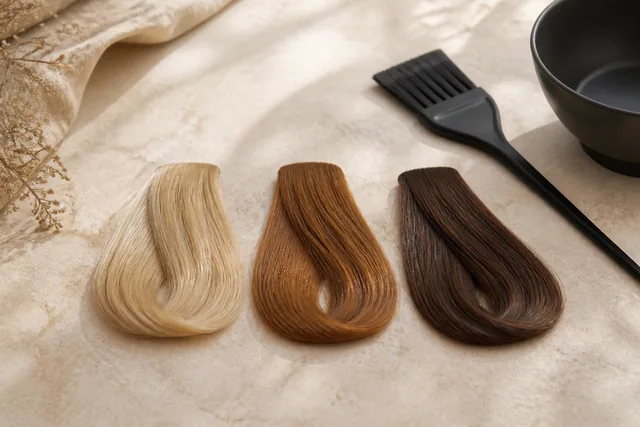
From blonde to brown: plan a darker hair colour deliberately
Colouring lightened hair brown: understand the starting point, plan your desired shade realistically and prepare for a considered change in the salon.
Read article -
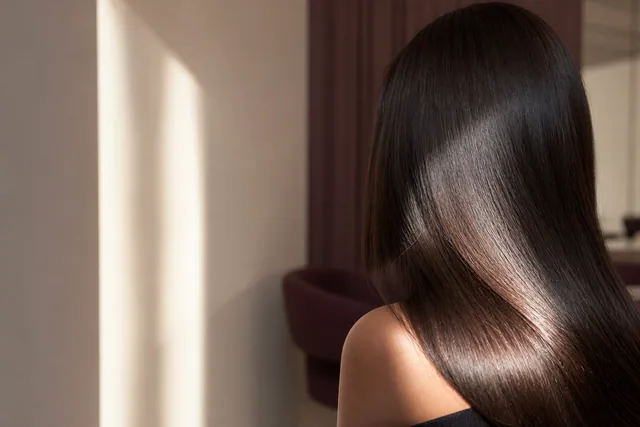
Hair glossing for added shine: what a toner can do
A clear guide to glossing on natural and coloured hair, including tone, limitations, care and refresh timing.
Read article